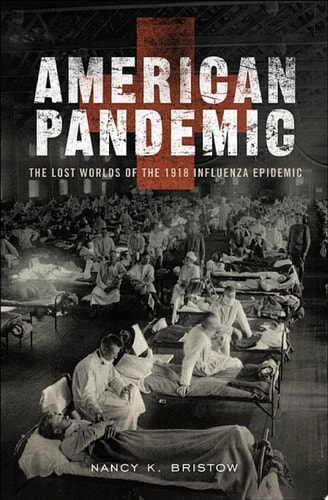
American Pandemic: The Lost Worlds of the 1918 Influenza Epidemic
0
0
As an Amazon Associate and affiliate partner, Menrva Books earns from qualifying purchases. Learn more
Author Description
Between the years 1918 and 1920, influenza raged around the globe in the worst pandemic in recorded history, killing at least fifty million people, more than half a million of them Americans. Yet despite the devastation, this catastrophic event seems but a forgotten moment in our nation's past. American Pandemic offers a much-needed corrective to the silence surrounding the influenza outbreak. It sheds light on the social and cultural history of Americans during the pandemic, uncovering both the causes of the nation's public amnesia and the depth of the quiet remembering that endured. Focused on the primary players in this drama--patients and their families, friends, and community, public health experts, and health care professionals--historian Nancy K. Bristow draws on multiple perspectives to highlight the complex interplay between social identity, cultural norms, memory, and the epidemic. Bristow has combed a wealth of primary sources, including letters, diaries, oral histories, memoirs, novels, newspapers, magazines, photographs, government documents, and health care literature. She shows that though the pandemic caused massive disruption in the most basic patterns of American life, influenza did not create long-term social or cultural change, serving instead to reinforce the status quo and the differences and disparities that defined American life. As the crisis waned, the pandemic slipped from the nation's public memory. The helplessness and despair Americans had suffered during the pandemic, Bristow notes, was a story poorly suited to a nation focused on optimism and progress. For countless survivors, though, the trauma never ended, shadowing the remainder of their lives with memories of loss. This book lets us hear these long-silent voices, reclaiming an important chapter in the American past.
Menrva's Summary
THE THESIS
This work investigates why the 1918 influenza pandemic, despite its catastrophic death toll, faded from the American public consciousness and how it reinforced existing social structures. Historian Nancy K. Bristow examines the cultural and social history of the United States during the crisis, utilizing a vast array of primary source materials. She argues that the nation's commitment to narratives of progress and optimism rendered the trauma of the pandemic incompatible with the collective memory, leading to a deliberate silence that persisted for decades.
THE SCOPE MAP
What You Will Find
- An analysis of the social and cultural impact of the 1918 influenza epidemic on American life.
- A study of public health responses and the roles of healthcare professionals during the crisis.
- Extensive use of primary source documentation, including personal letters, diaries, oral histories, and contemporary media.
- An examination of how social identity, class, and cultural norms influenced the experience and memory of the pandemic.
THE AUTHORITY PERSPECTIVE
Historians and scholars of public health recognize this text as a significant contribution to the social history of medicine. Readers frequently note the meticulous research and the author's ability to synthesize diverse personal accounts into a cohesive historical argument.
Page Count:
305
Publication Date:
2012-01-01
Publisher:
Oxford University Press
ISBN-10:
0199939322
ISBN-13:
9780199939329
History
Medical
Cultural History
Epidemics
Public Health
Epidemiology
Allied Health
American History
Influenza
Social History
Community Tags
Other Editions(2)
Similar Books



Reader Comments
Share Your Thoughts
No comments yet. Be the first to share your thoughts!