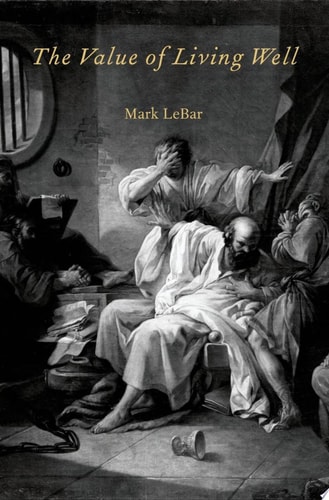
The Value of Living Well
0
0
As an Amazon Associate and affiliate partner, Menrva Books earns from qualifying purchases. Learn more
Author Description
Since the middle of the twentieth century, virtue ethics has enriched the range of philosophical approaches to normative ethics, often drawing on the work of the ancient Greeks, who offered accounts of the virtues that have become part of contemporary philosophical ethics. But these virtue ethical theories were situated within a more general picture of human practical rationality, one which maintained that to understand virtue we must appeal to what would make our lives go well. This feature of ethical theorizing has not become part of philosophical ethics, although the virtue theories dependent upon it have.This book is an attempt to bring eudaimonism into dialogue with contemporary philosophical work in ethical theory. It does not attempt to replicate the many contributions to normative ethics, in particular to thinking about the virtues. Instead, it attempts to contribute to metaethics -- to thinking about what we are doing when we think about normative ethics. In particular, it attempts to contribute to contemporary philosophical debate on the nature of what is good for us, on what we have most reason to do, on what facts about both those ideas consist in, on the nature of values and value facts, and the nature of the reasons for respect for others we might have. Its aim is to mark off space in these debates where a way of thinking about ourselves and our agential, practical, natures as the ancients did can enrich our thinking about those deep and important questions. In this way the book makes a case for what we might call Virtue Eudaimonism.
Menrva's Summary
THE THESIS
This book investigates whether the ancient Greek framework of eudaimonism can be integrated into contemporary metaethical debates to provide a more robust understanding of human practical rationality. Mark LeBar, a scholar of moral philosophy, examines the disconnect between modern virtue ethics and the broader eudaimonistic theories that originally supported them. By analyzing the nature of value, practical reason, and the good life, LeBar argues for a revitalized approach he terms Virtue Eudaimonism. The text serves as a bridge between classical philosophical traditions and current analytical discourse on normative ethics.
THE SCOPE MAP
What You Will Find
- A metaethical analysis of the relationship between virtue and human well-being.
- A critical evaluation of contemporary theories regarding practical rationality and value facts.
- A synthesis of ancient Greek eudaimonistic thought applied to modern ethical dilemmas.
- An exploration of the nature of reasons for respecting others within an agent-centered framework.
THE AUTHORITY PERSPECTIVE
Experts recognize this work as a significant contribution to the ongoing dialogue between classical virtue ethics and modern metaethical theory. Readers frequently note the academic density of the prose, which is intended for those already familiar with the foundational texts of moral philosophy.
Page Count:
384
Publication Date:
2013-05-28
Publisher:
Oxford University Press
ISBN-10:
0199931119
ISBN-13:
9780199931118
Philosophy
Virtue Ethics
Metaethics
Conduct Of Life
Ethics
Community Tags
Other Editions(2)

Similar Books