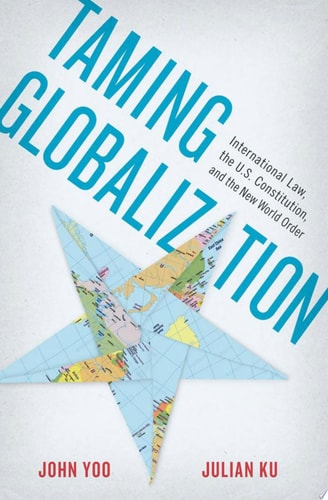
Taming Globalization
0
0
As an Amazon Associate and affiliate partner, Menrva Books earns from qualifying purchases. Learn more
Author Description
In 1997, A Mexican National Named Jose Ernesto Medellin Was Sentenced To Death For Raping And Murdering Two Teenage Girls In Texas. In 2004, The International Court Of Justice Ruled That He Was Entitled To Appellate Review Of His Sentence, Since The Arresting Officers Had Not Informed Him Of His Right To Seek Assistance From The Mexican Consulate Prior To Trial, As Prescribed By A Treaty Ratified By Congress In 1963. In 2008, Amid Fierce Controversy, The U.s. Supreme Court Declared That The International Ruling Had No Weight. Medellin Subsequently Was Executed. As Julian Ku And John Yoo Show In Taming Globalization, The Medellin Case Only Hints At The Legal Complications That Will Embroil American Courts In The Twenty-first Century. Like Medellin, Tens Of Millions Of Foreign Citizens Live In The United States; And Like The International Court Of Justice, Dozens Of International Institutions Cast A Legal Net Across The Globe, From Border Commissions To The World Trade Organization. Ku And Yoo Argue That All This Presents An Unavoidable Challenge To American Constitutional Law, Particularly The Separation Of Powers Between The Branches Of Federal Government And Between Washington And The States. To Reconcile The Demands Of Globalization With A Traditional, Formal Constitutional Structure, They Write, We Must Re-conceptualize The Constitution, As Americans Did In The Early Twentieth Century, When Faced With Nationalization. They Identify Three Mediating Devices We Must Embrace: Non-self-execution Of Treaties, Recognition Of The President's Power To Terminate International Agreements And Interpret International Law, And A Reliance On State Implementation Of International Law And Agreements. These Devices Will Help Us Avoid Constitutional Difficulties While Still Gaining The Benefits Of International Cooperation. Written By A Leading Advocate Of Executive Power And A Fellow Constitutional Scholar, Taming Globalization Promises To Spark Widespread Debate.
Menrva's Summary
THE THESIS
This book investigates the fundamental tension between the expansion of international legal institutions and the preservation of American constitutional sovereignty. Authors John Yoo and Julian Ku, both established legal scholars, analyze how the proliferation of global treaties and international bodies challenges the traditional separation of powers within the U.S. federal government. They argue that to maintain constitutional integrity in an era of globalization, the United States must adopt specific legal frameworks that prioritize domestic authority while still engaging with international cooperation.
THE SCOPE MAP
What You Will Find
- Analysis of the Medellin v. Texas case as a primary legal touchstone.
- Examination of the separation of powers between federal branches and state governments.
- Proposed legal mechanisms including non-self-execution of treaties and presidential termination power.
- A framework for reconciling national constitutional structures with globalized legal demands.
THE AUTHORITY PERSPECTIVE
Legal scholars and political analysts frequently cite this work as a significant contribution to the debate over executive power and international law. Readers often note the academic rigor of the authors' arguments, which provide a structured approach to navigating the complexities of modern treaty implementation.
Page Count:
280
Publication Date:
2012-01-01
Publisher:
Oxford University Press
ISBN-10:
0199930600
ISBN-13:
9780199930609
International relations
Constitutional Law
Globalization
Law
Community Tags
Other Editions(2)

Similar Books


Reader Comments
Share Your Thoughts
No comments yet. Be the first to share your thoughts!