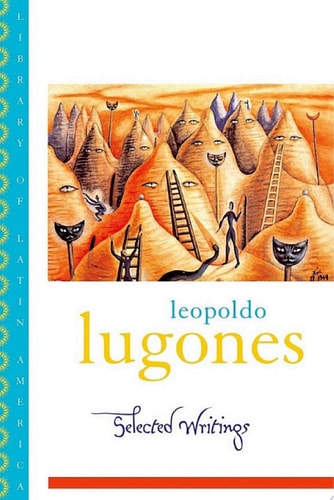
Leopoldo Lugones: Selected Writings
0
0
As an Amazon Associate and affiliate partner, Menrva Books earns from qualifying purchases. Learn more
Author Description
Argentina's best-known writer during his lifetime, Leopoldo Lugones's work spans many literary styles and ideological positions. He was influential as a modernist poet, as a precursor of the avant-garde, and also as the poet of Argentine nature. His short stories (Las Fuerzas Extranas: 1906) were early examples of the fantastic in Latin American fiction and influenced Borges, Quiroga, and others They reflect an interest in the uncanny and inspired contemporary interest in animism and occultism because the protagonists of many the stories were scientists and doctors experimenting in the transmutation of thought. His prose works include La Guerra Gaucha (1905) and the essay El Payador (1916) in which he idealized the gaucho as a heroic figure, popular poet, and a symbol of Argentine identity. Lugones altered his political views many times, adopting radical anarchism, and later in life, fascism. He was therefore a controversial figure, both accalimed and scorned by his contemporaries. His adherence to the importance of literary form drew criticism from the new generation of writers, such as Borges, but Borges later stated in 1955 that "Lugones was and continues to be the greatest Argentine writer."
Menrva's Summary
THE PULSE
This collection examines the shifting ideological and stylistic landscape of early 20th-century Argentine literature through the diverse body of work produced by Leopoldo Lugones. As a central figure in the development of Latin American modernism, Lugones navigates the tension between formal aesthetic perfection and the volatile political climate of his era. The anthology presents a non-linear progression of his career, moving from the scientific curiosity of his fantastic short stories to the nationalistic fervor of his essays on Argentine identity. The reader encounters a protagonist of letters who constantly redefines his relationship with tradition, nature, and the occult, often challenging the boundaries of the prose and poetic forms he mastered.
INSIDE THE PAGES
- Exploration of the fantastic and the uncanny in early 20th-century short fiction
- Integration of scientific and occult themes within narrative structures
- Idealization of the gaucho as a foundational symbol of national identity
- Application of modernist poetic techniques to describe the Argentine landscape
- Transition from radical anarchism to later political conservatism
- Influence of formalist literary theory on the development of the avant-garde
- Examination of the transmutation of thought through experimental character arcs
- Critical reflection on the role of the poet in shaping cultural consciousness
THE COLLECTIVE ECHO
Discussion often centers on the complex legacy of Lugones as both a technical innovator and a polarizing political figure. Readers frequently highlight the stark contrast between his early, imaginative forays into the fantastic and his later, more rigid ideological essays. Critics often note that while his political shifts drew significant scorn, his mastery of literary form remains a subject of intense study. The collection serves as a vital reference for understanding the evolution of Argentine letters and the specific influences he exerted on subsequent writers like Jorge Luis Borges.
Page Count:
148
Publication Date:
2008-01-01
Publisher:
Oxford University Press
ISBN-10:
0199938881
ISBN-13:
9780199938889
Poetry
Literature
English
English & College Success
Short Stories
Modernism
Latin American
Essays
Community Tags
Similar Books