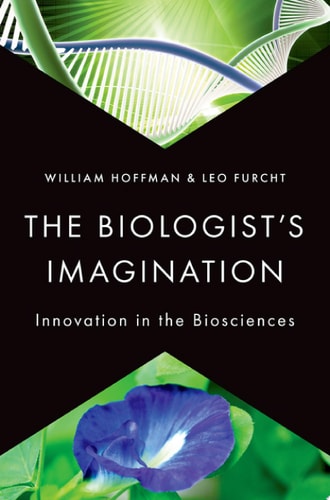
The Biologist's Imagination: Innovation in the Biosciences
0
0
As an Amazon Associate and affiliate partner, Menrva Books earns from qualifying purchases. Learn more
Author Description
Scholars and policymakers alike agree that innovation in the biosciences is key to future growth. The field continues to shift and expand, and it is certainly changing the way people live their lives in a variety of ways. With a large share of federal research dollars devoted to the biosciences, the field is just beginning to live up to its billing as a source of innovation, economic productivity and growth. Vast untapped potential to imagine and innovate exists in the biosciences given new tools now widely available.In The Biologist's Imagination, William Hoffman and Leo Furcht examine the history of innovation in the biosciences, tracing technological innovation from the late eighteenth century to the present and placing special emphasis on how and where technology evolves. Place is often key to innovation, from the early industrial age to the rise of the biotechnology industry in the second half of the twentieth century. The book uses the distinct history of bioinnovation to discuss current trends as they relate to medicine, agriculture, energy, industry, ecosystems, and climate. Fast-moving research fields like genomics, synthetic biology, stem cell research, neuroscience, bioautomation and bioprinting are accelerating these trends.Hoffman and Furcht argue that our system of bioscience innovation is itself in need of innovation. It needs to adapt to the massive changes brought about by converging technologies and the globalization of higher education, workforce skills, and entrepreneurship. The Biologist's Imagination is both a review of past models for bioscience innovation and a forward-looking, original argument for what future models should take into account.
Menrva's Summary
THE THESIS
How can the current model of bioscience innovation be adapted to sustain future economic growth and address global challenges? Authors Leo Furcht and William Hoffman analyze the historical trajectory of technological advancement in the biological sciences, from the eighteenth century to the modern era. They argue that the existing framework for research and development requires structural reform to accommodate the rapid convergence of new technologies and the globalization of the scientific workforce.
THE SCOPE MAP
What You Will Find
- Historical analysis of bioinnovation from the late eighteenth century to the present.
- Examination of the role of geography and institutional placement in fostering scientific breakthroughs.
- Discussion of emerging fields including genomics, synthetic biology, stem cell research, and bioprinting.
- Evaluation of how bioscience impacts medicine, agriculture, energy, and climate policy.
THE AUTHORITY PERSPECTIVE
Experts and academics recognize this work as a comprehensive synthesis of the intersection between historical scientific development and contemporary economic policy. Readers frequently note the book's utility for policymakers and researchers seeking to understand the structural requirements for future innovation in the biosciences.
Page Count:
304
Publication Date:
2014-06-02
Publisher:
Oxford University Press
ISBN-10:
0199974594
ISBN-13:
9780199974597
Science
History
Economics
Innovation
Biology
Life sciences
Technology
Community Tags
Similar Books