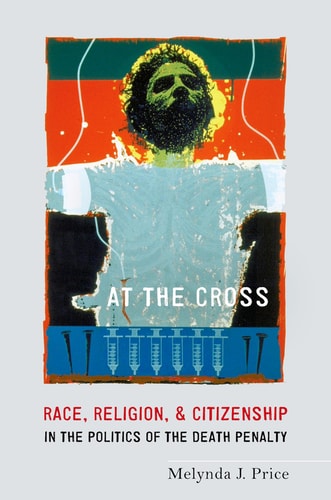
At the Cross: Race, Religion, and Citizenship in the Politics of the Death Penalty
0
0
As an Amazon Associate and affiliate partner, Menrva Books earns from qualifying purchases. Learn more
Author Description
Curing systemic inequalities in the criminal justice system is the unfinished business of the Civil Rights movement. No part of that system highlights this truth more than the current implementation of the death penalty. At the Cross tells a story of the relationship between the death penalty and race in American politics that complicates the common belief that individual African Americans, especially poor African Americans, are more subject to the death penalty in criminal cases. The current death penalty regime operates quite differently than it did in the past. The findings of this research demonstrate the the racial inequity in the meting out of death sentences has legal and political externalities that move beyond individual defendants to larger numbers of African Americans.At the Cross looks at the meaning of the death penalty to and for African Americans by using various sites of analysis. Using various sites of analysis, Price shows the connection between criminal justice policies like the death penalty and the political and legal rights of African Americans who are tangentially connected to the criminal justice system through familial and social networks. Drawing on black politics, legal and political theory and narrative analysis, Price utilizes a mixed-method approach that incorporates analysis of media reports, capital jury selection and survey data, as well as original focus group data. As the rates of incarceration trend upward, Black politics scholars have focused on the impact of incarceration on the voting strength of the black community. Local, and even regional, narratives of African American politics and the death penalty expose the fractures in American democracy that foment perceptions of exclusion among blacks.
Menrva's Summary
THE THESIS
This book investigates how the modern death penalty functions as a mechanism of racial inequality that extends beyond individual defendants to impact the broader African American community. Melynda J. Price, a legal scholar and expert in race and law, utilizes a multidisciplinary framework to analyze the intersection of capital punishment, black politics, and citizenship. By synthesizing legal theory with sociological data, she argues that the current death penalty regime creates political and legal externalities that reinforce systemic exclusion and fracture American democracy.
THE SCOPE MAP
What You Will Find
- Analysis of capital jury selection processes and media reporting on death penalty cases.
- Integration of original focus group data and public opinion surveys.
- Examination of how criminal justice policies affect the political rights of individuals connected through social and familial networks.
- Theoretical application of black politics and legal scholarship to contemporary sentencing trends.
Scope Limits
- The text does not provide a comprehensive historical survey of the death penalty prior to the modern era.
- The analysis focuses primarily on the American context and does not offer a comparative study of international capital punishment systems.
THE AUTHORITY PERSPECTIVE
Scholars in the fields of law and political science frequently cite this work for its nuanced approach to the collateral consequences of capital punishment. Experts highlight the text as a significant contribution to understanding how criminal justice policies shape the political identity and civic participation of marginalized communities.
Page Count:
232
Publication Date:
2015-07-01
Publisher:
Oxford University Press
ISBN-10:
0190205547
ISBN-13:
9780190205546
Law
Race Relations
Racism
American History
Sociology
Community Tags
Similar Books