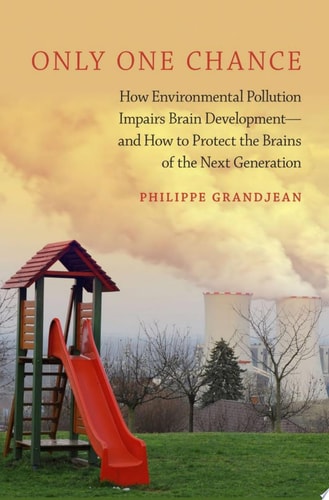
Only One Chance: How Environmental Pollution Impairs Brain Development -- and How to Protect the Brains of the Next Generation
0
0
As an Amazon Associate and affiliate partner, Menrva Books earns from qualifying purchases. Learn more
Author Description
Today, one out of every six children suffers from some form of neurodevelopmental abnormality. The causes are mostly unknown. Some environmental chemicals are known to cause brain damage and many more are suspected of it, but few have been tested for such effects. Philippe Grandjean provides an authoritative and engaging analysis of how environmental hazards can damage brain development and what we can do about it. The brain's development is uniquely sensitive to toxic chemicals, and even small deficits may negatively impact our academic achievements, economic success, risk of delinquency, and quality of life. Chemicals such as mercury, polychlorinated biphenyls (PCBs), arsenic, and certain pesticides pose an insidious threat to the development of the next generation's brains. When chemicals in the environment affect the development of a child's brain, he or she is at risk for mental retardation, cerebral palsy, autism, ADHD, and a range of learning disabilities and other deficits that will remain for a lifetime.We can halt chemical brain drain and protect the next generation, however, and Grandjean tells us how. First, we need to control all of the 200 industrial chemicals that have already been proven to affect brain functions in adults, as their effects on the developing brain are likely even worse. We must also push for routine testing for brain toxicity, stricter regulation of chemical emissions, and more required disclosure on the part of industries who unleash hazardous chemicals into products and the environment. Decisions can still be made to protect the brains of future generations.
Menrva's Summary
THE THESIS
This book investigates the critical link between environmental chemical exposure and the rising prevalence of neurodevelopmental disorders in children. Philippe Grandjean, a physician and public health expert, utilizes epidemiological data and toxicological research to argue that the human brain is uniquely vulnerable to industrial pollutants during early development. He presents a framework for understanding how even low-level chemical exposure can lead to lifelong cognitive and behavioral deficits, while proposing systemic policy changes to mitigate these risks.
THE SCOPE MAP
What You Will Find
- Analysis of neurotoxic chemicals including mercury, arsenic, PCBs, and pesticides.
- Evaluation of the biological vulnerability of the developing brain compared to adult brain function.
- Discussion of the socioeconomic impacts of neurodevelopmental abnormalities on academic and life outcomes.
- Policy recommendations for industrial chemical testing, emission regulation, and corporate disclosure requirements.
THE AUTHORITY PERSPECTIVE
Experts and public health professionals recognize this work as a significant contribution to the discourse on environmental toxicology and child development. Readers frequently note the clarity of the author's arguments, which translate complex scientific data into actionable policy insights for a general audience.
Page Count:
232
Publication Date:
2013-01-01
Publisher:
Oxford University Press
ISBN-10:
0199985405
ISBN-13:
9780199985401
Philosophy
Psychology
Science
Parenting
Sociology
Public Health
Environment
Community Tags
Other Editions(3)
Similar Books







Reader Comments
Share Your Thoughts
No comments yet. Be the first to share your thoughts!