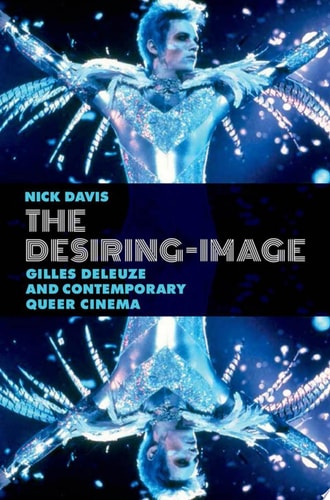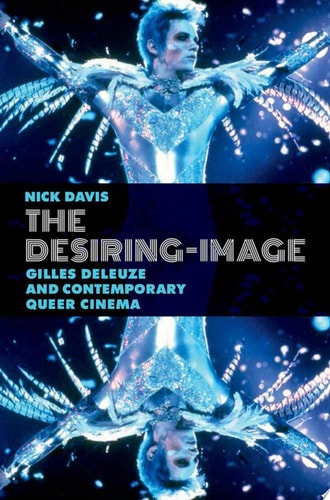
The Desiring-Image
0
0
As an Amazon Associate and affiliate partner, Menrva Books earns from qualifying purchases. Learn more
Author Description
The Desiring-image Yields New Models Of Queer Cinema Produced Since The Late 1980s, Based On Close Formal Analysis Of Diverse Films As Well As Innovative Contributions To Current Film Theory. The Book Defines Queer Cinema Less As A Specific Genre Or In Terms Of Gay And Lesbian Identity, But More Broadly As A Kind Of Filmmaking That Conveys Sexual Desire And Orientation As Potentially Fluid Within Any Individual's Experience, And As Forces That Can Therefore Unite Unlikely Groups Of People Along New Lines, Socially, Sexually, Or Politically. The Films Driving This Analysis Range From Celebrated Fixtures Of The New Queer Cinema Of The 1990s (including Cheryl Dunye's The Watermelon Woman And Todd Haynes's Velvet Goldmine) To Sexually Provocative Films Of The Same Era That Are Rarely Classified As Queer (david Cronenberg's Dead Ringers And Naked Lunch) To Breakout Films By 21st-century Directors (rodney Evans's Brother To Brother, John Cameron Mitchell's Shortbus). To Frame These Readings And To Avoid Heterosexist Assumptions In Other Forms Of Film Analysis, The Desiring-image Revisits The Work Of The Philosopher Gilles Deleuze, Whose Two Major Works On Cinema Somehow Never Address The Radical Ideas About Desire He Expresses In Other Texts. This Book Brings Those Notions Together In Innovative Ways, Making Them Clear And Accessible To Newcomers And Field Specialists Alike, With Clear, Illustrated Examples Drawn From A Wide Range Of Movies Extending Beyond The Central Case Studies. Thus, The Desiring-image Speaks To Readers Interested In Queer And Gay/lesbian Studies, In Film Theory, In Feminist And Sexuality Scholarship, And In Theory And Philosophy, Putting Those Discourses Into Rich, Surprising Conversations With Popular Cinema Of The Last 30 Years.
Menrva's Summary
THE THESIS
How can the philosophical framework of Gilles Deleuze be applied to redefine queer cinema beyond traditional identity-based categorizations? Nick Davis, an expert in film and media studies, argues that queer cinema should be understood as a mode of filmmaking that portrays sexual desire as a fluid, transformative force. By synthesizing Deleuze's theories on desire with formal film analysis, the author provides a new lens for examining how cinema connects disparate social and political groups through shared experiences of orientation.
THE SCOPE MAP
What You Will Find
- A re-evaluation of queer cinema from the late 1980s to the 21st century.
- Application of Deleuzian philosophy to contemporary film theory and practice.
- Comparative analysis of canonical queer films alongside mainstream or non-traditional works.
- A methodology for identifying fluid sexual desire within diverse cinematic narratives.
THE AUTHORITY PERSPECTIVE
Scholars and students of film theory frequently cite this work for its ability to bridge complex philosophical concepts with accessible cinematic examples. Experts highlight the text as a significant contribution to queer studies that successfully challenges heteronormative analytical frameworks.
Page Count:
368
Publication Date:
2013-01-01
Publisher:
Oxford University Press
ISBN-10:
0199993173
ISBN-13:
9780199993178
Philosophy
Queer Studies
Film Theory
Cinema
Community Tags
Similar Books