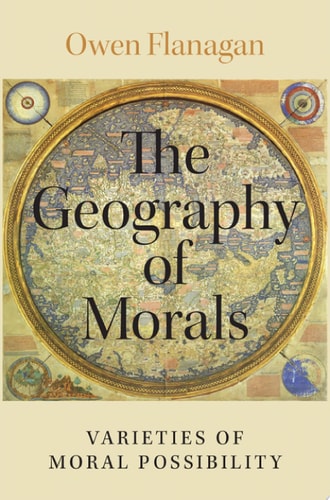
The Geography of Morals: Varieties of Moral Possibility
0
0
As an Amazon Associate and affiliate partner, Menrva Books earns from qualifying purchases. Learn more
Author Description
The Geography of Morals is a work of extraordinary ambition: an indictment of the parochialism of Western philosophy, a comprehensive dialogue between anthropology, empirical moral psychology, behavioral economics, and cross-cultural philosophy, and a deep exploration of the opportunities for self, social, and political improvement provided by world philosophy. We live in multicultural, cosmopolitan worlds. These worlds are distinctive moral ecologies in which people enact and embody different lived philosophies and conceive of mind, morals, and the meaning of life differently from the typical WEIRD -- Western, Educated, Industrialized, Rich, Democratic -- person. This is not a predicament; it is an opportunity. Many think that cross cultural understanding is useful for developing a modus vivendi where people from different worlds are not at each other's throats and tolerate each other. Flanagan presses the much more exciting possibility that cross-cultural philosophy provides opportunities for exploring the varieties of moral possibility, learning from other traditions, and for self, social, and political improvement. There are ways of worldmaking in other living traditions -- Confucian, Daoist, Buddhist, Hindu, Jain, Muslim, Amerindian, and African -- that citizens in Western countries can benefit from. Cross-cultural learning is protection against what Alasdair MacIntyre refers to as being "imprisoned by one's upbringing." Flanagan takes up perennial topics of whether there is anything to the idea of a common human nature, psychobiological sources of human morality, the nature of the self, the role of moral excellence in a good human life, and whether and how empirical inquiry into morality can contribute to normative ethics. The Geography of Morals exemplifies how one can respectfully conceive of multiculturalism and global interaction as providing not only opportunities for business and commerce, but also opportunities for socio-moral and political improvement
Menrva's Summary
THE THESIS
This work investigates whether cross-cultural philosophical inquiry can expand the boundaries of Western moral thought and facilitate social and political improvement. Owen Flanagan, a professor of philosophy and psychology, utilizes a multidisciplinary framework to challenge the limitations of WEIRD (Western, Educated, Industrialized, Rich, Democratic) perspectives. He argues that by engaging with diverse global traditions, individuals can transcend the constraints of their own upbringing to discover new possibilities for human flourishing.
THE SCOPE MAP
What You Will Find
- Comparative analysis of Confucian, Daoist, Buddhist, Hindu, Jain, Muslim, Amerindian, and African moral traditions.
- Integration of empirical moral psychology and behavioral economics with normative ethics.
- Examination of the psychobiological foundations of human morality and the concept of the self.
Scope Limits
- The text does not provide a comprehensive history of every global philosophical tradition mentioned.
- It does not offer a prescriptive manual for specific political policy implementation.
THE AUTHORITY PERSPECTIVE
Scholars and readers frequently note the academic density of the prose and the ambitious scope of Flanagan's interdisciplinary approach. Experts highlight this as a significant contribution to the field of comparative philosophy for those seeking to move beyond Western-centric ethical frameworks.
Page Count:
371
Publication Date:
2016-01-01
Publisher:
Oxford University Press
ISBN-10:
0190212179
ISBN-13:
9780190212179
Religion
Philosophy
Sociology
Ethics
Cultural Anthropology
Anthropology
Buddhism
Community Tags
Similar Books