How to Hide an Empire: A History of the Greater United States
0
0
As an Amazon Associate and affiliate partner, Menrva Books earns from qualifying purchases. Learn more
Author Description
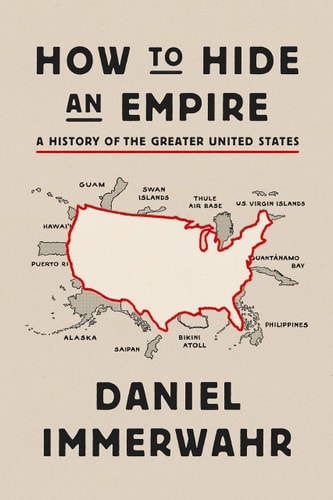
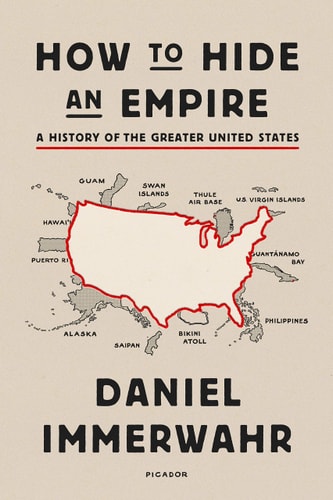
Named one of the ten best books of the year by the Chicago Tribune A Publishers Weekly best book of 2019 | A 2019 NPR Staff Pick A pathbreaking history of the United States’ overseas possessions and the true meaning of its empire We are familiar with maps that outline all fifty states. And we are also familiar with the idea that the United States is an “empire,” exercising power around the world. But what about the actual territories—the islands, atolls, and archipelagos—this country has governed and inhabited? In How to Hide an Empire, Daniel Immerwahr tells the fascinating story of the United States outside the United States. In crackling, fast-paced prose, he reveals forgotten episodes that cast American history in a new light. We travel to the Guano Islands, where prospectors collected one of the nineteenth century’s most valuable commodities, and the Philippines, site of the most destructive event on U.S. soil. In Puerto Rico, Immerwahr shows how U.S. doctors conducted grisly experiments they would never have conducted on the mainland and charts the emergence of independence fighters who would shoot up the U.S. Congress. In the years after World War II, Immerwahr notes, the United States moved away from colonialism. Instead, it put innovations in electronics, transportation, and culture to use, devising a new sort of influence that did not require the control of colonies. Rich with absorbing vignettes, full of surprises, and driven by an original conception of what empire and globalization mean today, How to Hide an Empire is a major and compulsively readable work of history.
Menrva's Summary
THE THESIS
This book investigates the true meaning of the United States' empire by examining its overseas possessions and the history of their governance. Daniel Immerwahr, an associate professor of history, draws on forgotten episodes and overlooked territories to present a revised understanding of American expansion and influence. The book utilizes a narrative approach, weaving together stories from places like the Guano Islands, the Philippines, and Puerto Rico to illustrate the complex and often brutal realities of U.S. territorial control. Immerwahr argues that while the U.S. may have moved away from formal colonialism after World War II, its methods of influence evolved rather than disappeared, adapting to new technological and cultural landscapes.
THE SCOPE MAP
- A history of U.S. overseas possessions, including islands, atolls, and archipelagos.
- Examination of forgotten episodes in American history related to territorial expansion and governance.
- Case studies from the Guano Islands, the Philippines, and Puerto Rico.
- Analysis of U.S. medical experiments conducted in territories and the rise of independence movements.
- Discussion of the shift from colonialism to new forms of influence after World War II.
- Exploration of the concepts of empire and globalization in the modern era.
THE AUTHORITY PERSPECTIVE
This book has been recognized for its pathbreaking approach to American history, earning accolades such as being named a best book of the year by the Chicago Tribune and a Publishers Weekly best book of 2019. Reviewers and NPR staff have highlighted its crackling, fast-paced prose and its ability to cast American history in a new light through forgotten episodes. The work is praised for its original conception of empire and globalization, making it a major and compulsively readable work of history.
Page Count:
528
Publication Date:
2020-03-03
Publisher:
Picador
ISBN-10:
1250251095
ISBN-13:
9781250251091
Non-Fiction
History
American History
Imperialism
American Studies