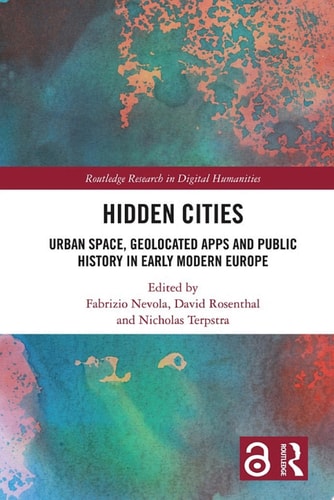
Hidden Cities: Urban Space, Geolocated Apps and Public History in Early Modern Europe
0
0
As an Amazon Associate and affiliate partner, Menrva Books earns from qualifying purchases. Learn more
Author Description
This groundbreaking collection explores the convergence of the spatial and digital turns through a suite of smartphone apps (Hidden Cities) that present research-led itineraries in early modern cities as public history. The Hidden Cities apps have expanded from an initial case example of Renaissance Florence to a further five historic European cities. This collection considers how the medium structures new methodologies for site-based historical research, while also providing a platform for public history experiences that go beyond typical heritage priorities. It also presents guidelines for user experience design that reconciles the interests of researchers and end users. A central section of the volume presents the underpinning original scholarship that shapes the locative app trails, illustrating how historical research can be translated into public-facing work. The final section examines how history, delivered in the format of geolocated apps, offers new opportunities for collaboration and innovation: from the creation of museums without walls, connecting objects in collections to their original settings, to informing decision-making in city tourism management. Hidden Cities is a valuable resource for upper-level undergraduates, postgraduates, and scholars across a variety of disciplines including urban history, public history, museum studies, art and architecture, and digital humanities. The Open Access version of this book, available at www.taylorfrancis.com, has been made available under a Creative Commons Attribution-Non Commercial-No Derivatives 4.0 license.
Menrva's Summary
THE THESIS
This collection investigates how geolocated mobile applications can transform the presentation of historical research in early modern European cities. The book examines the 'Hidden Cities' project, which uses smartphone apps to create research-led itineraries, moving beyond traditional heritage sites to offer new methodologies for site-based historical research and public engagement. It explores the translation of original scholarship into public-facing work, offering guidelines for user experience design that balances researcher and end-user needs. The volume also considers the potential of app-delivered history to foster collaboration, create 'museums without walls,' and inform urban tourism management.
THE SCOPE MAP
- Exploration of the convergence of spatial and digital turns in historical research.
- Case studies of the 'Hidden Cities' smartphone apps in six historic European cities, starting with Renaissance Florence.
- Analysis of new methodologies for site-based historical research facilitated by mobile technology.
- Examination of public history experiences that extend beyond conventional heritage priorities.
- Guidelines for user experience design in geolocated apps, reconciling researcher and end-user interests.
- Presentation of underpinning original scholarship that shapes the locative app trails.
- Discussion of how app-delivered history creates opportunities for collaboration and innovation in museums and tourism.
THE AUTHORITY PERSPECTIVE
This collection is positioned as a valuable resource for upper-level undergraduates, postgraduates, and scholars in fields such as urban history, public history, museum studies, art and architecture, and digital humanities. The subject matter suggests a scholarly approach that bridges academic research with public accessibility. The focus on innovative digital methodologies for historical engagement indicates a forward-looking perspective on the discipline.
Page Count:
272
Publication Date:
2022-03-02
Publisher:
Routledge
ISBN-10:
1000554953
ISBN-13:
9781000554953
Non-Fiction
History
Architecture
Technology
Museum Studies
Cultural History
Art History
Urban History
Public History
European History
Community Tags
Other Editions(3)
Similar Books















Reader Comments
Share Your Thoughts
No comments yet. Be the first to share your thoughts!