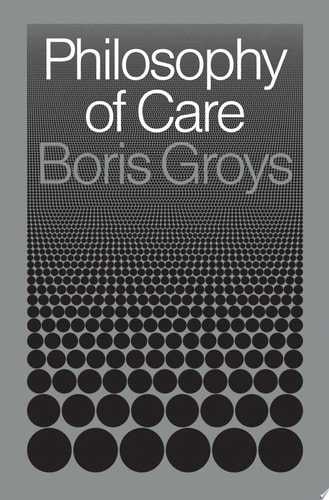
Philosophy of Care
0
0
As an Amazon Associate and affiliate partner, Menrva Books earns from qualifying purchases. Learn more
Author Description
Retracing the philosophical discussions around care Our current culture is dominated by the ideology of creativity. One is supposed to create the new and not to care about the things as they are. This ideology legitimises the domination of the “creative class” over the rest of the population that is predominantly occupied by forms of care – medical care, child care, agriculture, industrial maintenance and so on. We have a responsibility to care for our own bodies, but here again our culture tends to thematize the bodies of desire and to ignore the bodies of care – ill bodies in need of self-care and social care. But the discussion of care has a long philosophical tradition. The book retraces some episodes of this tradition - beginning with Plato and ending with Alexander Bogdanov through Hegel, Heidegger, Bataille and many others. The central question discussed is: who should be the subject of care? Should I care for myself or trust the others, the system, the institutions? Here, the concept of the self-care becomes a revolutionary principle that confronts the individual with the dominating mechanisms of control.
Menrva's Summary
THE THESIS
This book investigates the philosophical underpinnings and historical trajectory of the concept of care, contrasting it with the dominant ideology of creativity. Boris Groys, a noted philosopher, examines how contemporary culture prioritizes creation over maintenance, leading to the marginalization of care-related labor and bodies. The work traces philosophical discussions on care from Plato through Hegel and Heidegger to Alexander Bogdanov, posing the central question of who should be the subject of care: the self, others, or institutions. It argues that the concept of self-care can function as a revolutionary principle against pervasive control mechanisms.
THE SCOPE MAP
- Exploration of the ideology of creativity versus the ideology of care in contemporary culture.
- Analysis of the social and economic implications of prioritizing creation over maintenance.
- Historical tracing of philosophical discussions on care, featuring figures like Plato, Hegel, Heidegger, Bataille, and Alexander Bogdanov.
- Examination of the concept of 'bodies of care' (ill bodies, bodies needing maintenance) versus 'bodies of desire'.
- Discussion on the responsibility of self-care versus reliance on others, systems, and institutions.
- The concept of self-care as a revolutionary principle against mechanisms of control.
THE AUTHORITY PERSPECTIVE
The book offers a critical examination of the philosophical discourse surrounding care, positioning it against the prevailing emphasis on creativity. It traces a historical lineage of thought on care, engaging with key philosophers to explore its significance. The work suggests that a focus on self-care can challenge dominant societal structures. The authority perspective is that this philosophical inquiry provides a framework for understanding the often-overlooked importance of care in society.
Page Count:
112
Publication Date:
2022-03-01
Publisher:
Verso Books
ISBN-10:
1839764929
ISBN-13:
9781839764929
Philosophy
Non-Fiction
Ethics
Community Tags
Other Editions(3)

Similar Books