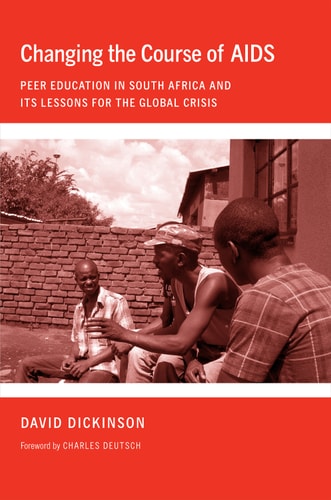
Changing the Course of AIDS: Peer Education in South Africa and Its Lessons for the Global Crisis
0
0
As an Amazon Associate and affiliate partner, Menrva Books earns from qualifying purchases. Learn more
Author Description
Changing the Course of AIDS is an in-depth evaluation of a new and exciting way to create the kind of much-needed behavioral change that could affect the course of the global health crisis of HIV/AIDS. This case study from the South African HIV/AIDS epidemic demonstrates that regular workers serving as peer educators can be as—or even more—effective agents of behavioral change than experts who lecture about the facts and so-called appropriate health care behavior. After spending six years researching the response of large South African companies to the epidemic that is decimating their workforce as well as South African communities, David Dickinson describes the promise of this grassroots intervention—workers educating one another in the workplace and community—and the limitations of traditional top-down strategies. Dickinson's book takes us right into the South African workplace to show how effective and yet enormously complex peer education really is. We see what it means when workers directly tackle the kinds of sexual, gender, religious, ethnic, and broader social and political taboos that make behavior change so difficult, particularly when that behavior involves sex and sexuality. Dickinson's findings show that people who are not officially health care experts or even health care workers can be skilled and effective educators. In this book we see why peer education has so much to offer societies grappling with the HIV/AIDS epidemic and why those interested in changing behaviors to ameliorate other health problems like obesity, alcoholism, and substance abuse have so much to learn from the South African example.
Menrva's Summary
THE THESIS
This book investigates the efficacy of peer education as a strategy for behavioral change in the context of the HIV/AIDS epidemic in South Africa. David Dickinson's research, spanning six years, examines the response of large South African companies to the epidemic's impact on their workforce and communities. The work contrasts the effectiveness of grassroots interventions, where regular workers educate each other, with the limitations of traditional top-down approaches, highlighting the complexities and successes of peer educators tackling sensitive social and sexual taboos.
THE SCOPE MAP
- An in-depth evaluation of peer education as a behavioral change strategy for HIV/AIDS.
- A case study of the South African HIV/AIDS epidemic and corporate responses.
- Analysis of regular workers as effective agents of behavioral change compared to experts.
- Exploration of how peer educators tackle sexual, gender, religious, ethnic, and social taboos.
- Insights into the complexities and successes of workplace and community-based peer education.
- Lessons learned from the South African example applicable to other health issues like obesity, alcoholism, and substance abuse.
THE AUTHORITY PERSPECTIVE
The book presents a compelling case for grassroots interventions in public health, drawing on extensive research within South African workplaces. It highlights the significant potential of peer educators, who are not official health experts, to drive behavioral change. The findings suggest that this model offers valuable lessons for addressing not only HIV/AIDS but also other public health challenges globally. The work is positioned as a critical resource for those interested in understanding and implementing effective behavior change strategies.
Page Count:
272
Publication Date:
2011-03-15
Publisher:
Cornell University Press
ISBN-10:
0801457262
ISBN-13:
9780801457265
Non-Fiction
History
Health
Sociology
Public Health
Africa
Social Science
South Africa
Community Tags
Similar Books