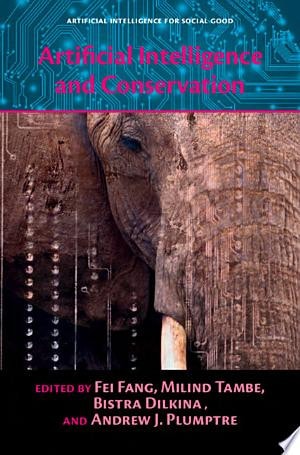
Artificial Intelligence and Conservation
0
0
As an Amazon Associate and affiliate partner, Menrva Books earns from qualifying purchases. Learn more
Author Description
With the increasing public interest in artificial intelligence (AI), there is also increasing interest in learning about the benefits that AI can deliver to society. This book focuses on research advances in AI that benefit the conservation of wildlife, forests, coral reefs, rivers, and other natural resources. It presents how the joint efforts of researchers in computer science, ecology, economics, and psychology help address the goals of the United Nations' 2030 Agenda for Sustainable Development. Written at a level accessible to conservation professionals and AI researchers, the book offers both an overview of the field and an in-depth view of how AI is being used to understand patterns in wildlife poaching and enhance patrol efforts in response, covering research advances, field tests and real-world deployments. The book also features efforts in other major conservation directions, including protecting natural resources, ecosystem monitoring, and bio-invasion management through the use of game theory, machine learning, and optimization.
Menrva's Summary
THE THESIS
This book explores the transformative applications of artificial intelligence (AI) in addressing critical global conservation challenges. It details how interdisciplinary research, combining computer science with ecology, economics, and psychology, contributes to the United Nations' 2030 Agenda for Sustainable Development. The work provides a comprehensive overview for both conservation professionals and AI researchers, examining AI's role in combating wildlife poaching, optimizing patrol efforts, monitoring ecosystems, and managing bio-invasions.
THE SCOPE MAP
- Research advances in AI for wildlife conservation, forest protection, coral reef preservation, and river health.
- Applications of AI in understanding patterns of wildlife poaching and enhancing anti-poaching patrol strategies.
- Field tests and real-world deployments of AI technologies in conservation efforts.
- The use of game theory, machine learning, and optimization techniques in resource management and bio-invasion control.
- Contributions of AI to ecosystem monitoring and biodiversity protection.
- Interdisciplinary approaches involving computer science, ecology, economics, and psychology.
THE AUTHORITY PERSPECTIVE
The book is positioned as an accessible yet in-depth resource for professionals in both AI and conservation fields. Its focus on practical applications and real-world deployments suggests a utility for practitioners seeking to leverage AI for environmental protection. The interdisciplinary nature of the content indicates a broad appeal to researchers and policymakers interested in sustainable development and technological solutions to ecological problems.
Page Count:
247
Publication Date:
2019-03-28
Publisher:
Cambridge University Press
ISBN-10:
1108672922
ISBN-13:
9781108672924
Non-Fiction
Science & Technology
Conservation
Machine Learning
Ecology
Computer Science
Game theory
Community Tags
Other Editions(2)

Similar Books