
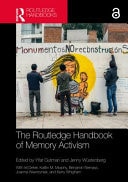
The Routledge Handbook of Memory Activism
0
0
As an Amazon Associate and affiliate partner, Menrva Books earns from qualifying purchases. Learn more
Author Description
This Handbook is the first systematic effort to map the fast-growing phenomenon of memory activism and to delineate a new field of research that lies at the intersection of memory and social movement studies. From Charlottesville to Cape Town, from Santiago to Sydney, we have recently witnessed protesters demanding that symbols of racist or colonial pasts be dismantled and that we talk about histories that have long been silenced. But such events are only the most visible instances of grassroots efforts to influence the meaning of the past in the present. Made up of more than 80 chapters that encapsulate the rich diversity of scholarship and practice of memory activism by assembling different disciplinary traditions, methodological approaches, and empirical evidence from across the globe, this Handbook establishes important questions and their theoretical implications arising from the social, political, and economic reality of memory activism. Memory activism is multifaceted, takes place in a variety of settings, and has diverse outcomes - but it is always crucial to understanding the constitution and transformation of our societies, past and present. This volume will serve as a guide and establish new analytic frameworks for scholars, students, policymakers, journalists, and activists alike.
Menrva's Summary
THE THESIS
This Handbook systematically maps the burgeoning field of memory activism, exploring its intersection with social movement studies. It addresses the global phenomenon of individuals and groups demanding recognition of silenced histories and the dismantling of symbols representing oppressive pasts, drawing on over 80 chapters that integrate diverse scholarly traditions, methodologies, and empirical evidence from around the world. The volume establishes key theoretical questions and implications arising from the social, political, and economic realities of memory activism. It highlights that while memory activism is multifaceted and occurs in various settings with diverse outcomes, it is consistently crucial for understanding societal constitution and transformation.
THE SCOPE MAP
- A comprehensive overview of the fast-growing phenomenon of memory activism.
- Analysis of memory activism at the intersection of memory studies and social movement studies.
- Empirical evidence and case studies from diverse global locations (e.g., Charlottesville, Cape Town, Santiago, Sydney).
- Integration of scholarship from various disciplinary traditions and methodological approaches.
- Exploration of the social, political, and economic realities and implications of memory activism.
- Discussion of the diverse settings, manifestations, and outcomes of memory activism.
- Establishment of new analytic frameworks for scholars, students, policymakers, journalists, and activists.
THE AUTHORITY PERSPECTIVE
This Handbook is positioned as the first systematic effort to define and map the field of memory activism, establishing it as a significant area of academic inquiry. It aims to provide a comprehensive resource for scholars, students, policymakers, journalists, and activists by assembling a wide range of global perspectives and empirical evidence. The volume's structure, with over 80 chapters, suggests a thorough and multi-faceted exploration of the subject. Its interdisciplinary approach and focus on practical implications indicate its potential to shape future research and public discourse on how the past is contested and remembered in the present.
Page Count:
558
Publication Date:
2024-08-26
Publisher:
Routledge
ISBN-10:
036765041X
ISBN-13:
9780367650414
History
Non-Fiction
Politics
Sociology
Memory Studies
Community Tags
Other Editions(2)
Similar Books











Reader Comments
Share Your Thoughts
No comments yet. Be the first to share your thoughts!