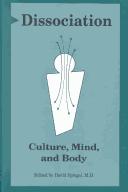
Dissociation: Culture, Mind, and Body
0
0
As an Amazon Associate and affiliate partner, Menrva Books earns from qualifying purchases. Learn more
Author Description
Dissociation challenges many comfortable assumptions. Dissociative phenomena are often stark, extreme, and vivid. The identities of individuals with dissociation disorders shift between apparent opposites. Their pain is ignored. Trauma victims report floating above their injured bodies. Are these arcane, dramatic, or staged events, or does dissociation underlie some fundamental aspect of mental organization? Is dissociation the product of a troubled mind or a key to understanding the structure of consciousness and the mind-body relationship? Dissociation: Culture, Mind, and Body is the first book to combine cultural anthropology, cognitive psychology, neurophysiology, and the study of psychosomatic illness to present the latest information on the dissociative process. A variety of leading experts in each of these fields bring their knowledge on the unique role that dissociation plays in moderating social and psychological effects on the body. Dissociation: Culture, Mind, and Body is an invaluable resource for every student of dissociation and is designed for professionals in cross-cultural psychiatry and the influence of the mind on the body.
Menrva's Summary
THE THESIS
This book investigates the complex nature of dissociation, questioning whether it is a symptom of a troubled mind or a fundamental aspect of consciousness. The author, David Spiegel, draws on cultural anthropology, cognitive psychology, and neurophysiology to explore dissociative phenomena, which often manifest as stark, extreme, and vivid shifts in identity and experience, particularly in trauma victims. The book examines how these experiences, often dismissed or ignored, challenge conventional understandings of the mind-body relationship and mental organization. It seeks to integrate diverse expert perspectives to illuminate the role of dissociation in moderating social and psychological effects on the body.
THE SCOPE MAP
- Exploration of dissociative phenomena as shifts between apparent opposites.
- Discussion of trauma victims' experiences, such as out-of-body sensations.
- Integration of cultural anthropology, cognitive psychology, and neurophysiology.
- Analysis of the mind-body relationship through the lens of dissociation.
- Examination of psychosomatic illness and its connection to dissociation.
- Contributions from leading experts in various fields related to dissociation.
- Focus on the moderating role of dissociation in social and psychological effects on the body.
THE AUTHORITY PERSPECTIVE
This book is presented as an invaluable resource for students of dissociation and professionals in cross-cultural psychiatry and psychosomatic studies. The interdisciplinary approach, combining anthropology, psychology, and neurophysiology, aims to provide a comprehensive overview of the latest information on the dissociative process. The work is designed to challenge comfortable assumptions about mental organization and consciousness by exploring extreme and vivid dissociative experiences. It seeks to bridge the gap between understanding dissociation as a product of a troubled mind versus a key to understanding consciousness itself.
Page Count:
227
Publication Date:
1994-01-01
ISBN-10:
0880485574
Non-Fiction
Psychology
Trauma Studies
Mind Body Connection
Cognitive Psychology
Cultural Anthropology
Community Tags
Similar Books