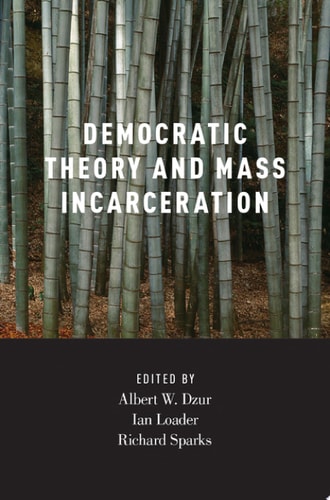
Democratic Theory and Mass Incarceration
0
0
As an Amazon Associate and affiliate partner, Menrva Books earns from qualifying purchases. Learn more
Author Description
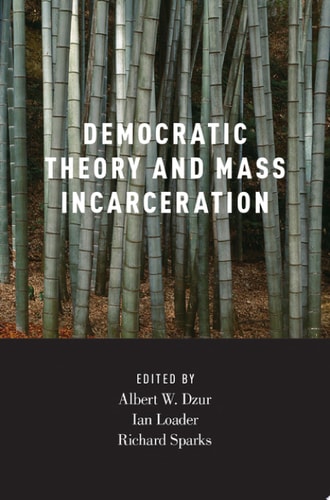
The United States leads the world in incarceration, and the United Kingdom is persistently one of the European countries with the highest per capita rates of imprisonment. Yet despite its increasing visibility as a social issue, mass incarceration - and its inconsistency with core democratic ideals - rarely surfaces in contemporary Anglo-American political theory. Democratic Theory and Mass Incarceration seeks to overcome this puzzling disconnect by deepening the dialogue between democratic theory and punishment policy.This collection of original essays initiates a multi-disciplinary discussion among philosophers, political theorists, and criminologists regarding ways in which contemporary democratic theory might begin to think beyond mass incarceration. Rather than viewing punishment as a natural reaction to crime and imprisonment as a sensible outgrowth of this reaction, the volume argues that crime and punishment are institutions that reveal unmet demands for public oversight and democratic influence. Chapters explore theoretical paths towards de-carceration and alternatives to prison, suggest ways in which democratic theory can strengthen recent reform movements, and offer creative alternatives to mass incarceration. Democratic Theory and Mass Incarceration offers guideposts for critical thinking about incarceration, examining ways to rebuild crime control institutions and create a healthier, more just society.
Menrva's Summary
THE THESIS
This collection investigates the fundamental tension between the prevalence of mass incarceration in Anglo-American societies and the core principles of democratic governance. The editors, Albert W. Dzur, Ian Loader, and Richard Sparks, curate a series of essays from philosophers, political theorists, and criminologists to bridge the gap between abstract democratic ideals and the reality of current penal policies. The volume argues that the prison system should not be viewed as an inevitable response to crime, but rather as an institution that highlights a significant deficit in public oversight and democratic participation.
THE SCOPE MAP
What You Will Find
- Analysis of the disconnect between contemporary political theory and penal policy
- Theoretical frameworks for de-carceration and prison alternatives
- Multidisciplinary perspectives on institutional reform
- Critical evaluation of crime control mechanisms in the US and UK
Scope Limits
- Does not provide a comprehensive legislative roadmap for specific policy changes
- Focuses primarily on Anglo-American contexts rather than global penal systems
THE AUTHORITY PERSPECTIVE
Experts identify this volume as a significant contribution to the intersection of political philosophy and criminal justice studies. Readers frequently note the academic density of the prose, which serves as a rigorous resource for scholars and students interested in the theoretical underpinnings of penal reform.
Page Count:
358
Publication Date:
2016-10-24
Publisher:
Oxford University Press
ISBN-10:
0190243090
ISBN-13:
9780190243098
Philosophy
Criminology
Administration of Justice
Social justice
Imprisonment
Professional Career & Trade
Sociology
Law