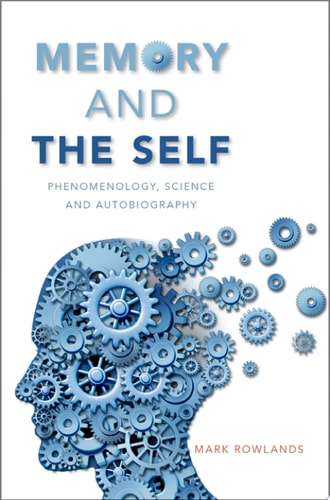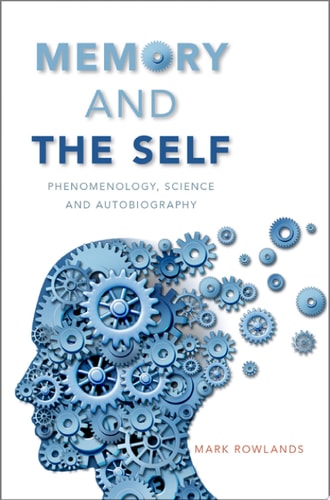
Memory and the Self: Phenomenology, Science and Autobiography
0
0
As an Amazon Associate and affiliate partner, Menrva Books earns from qualifying purchases. Learn more
Author Description
The Idea That Our Memories, In Some Sense, Make Us Who We Are, Is A Common One-and Not At All Implausible. After All, What Could Make Us Who We Are If Not The Things We Have Experienced, Thought, Felt And Desired On These Idiosyncratic Pathways Through Space And Time That We Call Lives? And How Can We Retain These Experiences, Thoughts, Feelings And Desires If Not Through Memory? On The Other Hand, Most Of What We Have Experienced Has Been Forgotten. And There Is Now A Considerable Body Of Evidence That Suggests That, Even When We Think We Remember, Our Memories Are Likely To Be Distorted, Sometimes Beyond Recognition. Imagine Writing Your Autobiography, Only To Find That That Most Of It Has Been Redacted, And Much Of The Rest Substantially Rewritten. What Would Hold This Book Together? What Would Make It The Unified And Coherent Account Of A Life? The Answer, Mark Rowlands Argues, Lies, Partially Hidden, In A Largely Unrecognized Form Of Memory-rilkean Memory. A Rilkean Memory Is Produced When The Content Of A Memory Is Lost But The Act Of Remembering Endures, In A New, Mutated, Form: A Mood, A Feeling, Or A Behavioral Disposition. Rilkean Memories Play A Significant Role In Holding The Self Together In The Face Of The Poverty And Inaccuracy Of The Contents Of Memory. But Rilkean Memories Are Important Not Just Because Of What They Are, But Also Because Of What They Were Before They Became Such Memories. Acts Of Remembering Sculpt The Contents Of Memories Out Of The Slabs Of Remembered Episodes. Our Acts Of Remembering Ensure That We Are In The Content Of Each Of Our Memories-present In The Way A Sculptor Is Present In His Creation-even When This Content Is Lamentably Sparse And Endemically Inaccurate.
Menrva's Summary
THE THESIS
This book investigates the fundamental question of how personal identity remains coherent and unified despite the inherent fallibility and incompleteness of human memory. Mark Rowlands, a philosopher, synthesizes phenomenological inquiry with contemporary cognitive science to challenge the traditional view that memory content is the primary anchor of the self. He proposes the existence of 'Rilkean memory'—a form of memory where the original content is lost, but the act of remembering persists as a mood, feeling, or behavioral disposition that shapes the individual.
THE SCOPE MAP
What You Will Find
- A philosophical framework defining Rilkean memory as a structural component of the self.
- An analysis of the intersection between autobiographical narrative and cognitive accuracy.
- A critique of the reliance on episodic memory for identity formation.
Scope Limits
- The text does not provide a comprehensive clinical guide to memory disorders or neurological pathology.
- It does not offer a historical survey of autobiographical literature, focusing instead on the philosophical mechanics of self-construction.
THE AUTHORITY PERSPECTIVE
Readers frequently note the philosophical density of the prose, which requires a foundational understanding of phenomenology to fully grasp. Experts highlight this work as a significant contribution to the philosophy of mind, particularly for its novel approach to the relationship between memory and personal identity.
Page Count:
256
Publication Date:
2017-01-01
Publisher:
Oxford University Press, Incorporated
ISBN-10:
0190241470
ISBN-13:
9780190241476
Philosophy
Autobiography
Psychology
Phenomenology
Self Philosophy
Memory
Memory Studies
Community Tags
Other Editions(2)
Similar Books