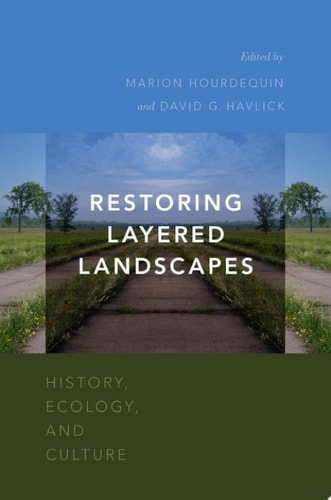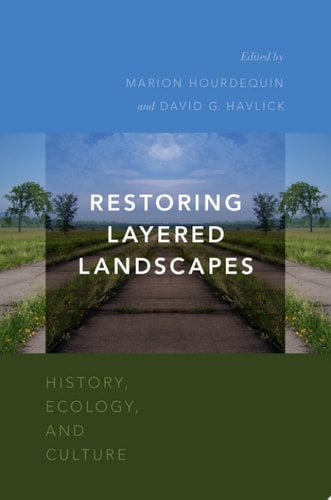
Restoring Layered Landscapes
0
0
As an Amazon Associate and affiliate partner, Menrva Books earns from qualifying purchases. Learn more
Author Description
Restoring Layered Landscapes brings together historians, geographers, philosophers, and interdisciplinary scholars to explore ecological restoration in landscapes with complex histories shaped by ongoing interactions between humans and nature. For many decades, ecological restoration - particularly in the United States - focused on returning degraded sites to conditions that prevailed prior to human influence. This model has been broadened in recent decades, and restoration now increasingly focuses on the recovery of ecological functions and processes rather than on returning a site to a specific historical state. Nevertheless, neither the theory nor the practice of restoration has fully come to terms with the challenges of restoring layered landscapes, where nature and culture shape one another in deep and ongoing relationships. Former military and industrial sites provide paradigmatic examples of layered landscapes. Many of these sites are not only characterized by natural ecosystems worth preserving and restoring, but also embody significant political, social, and cultural histories. This volume grapples with the challenges of restoring and interpreting such complex sites: what should we aim to restore in such places? How can restoration adequately take the legacies of human use into account? Should traces of the past be left on the landscape, and how can interpretive strategies be creatively employed to make visible the complex legacies of an open pit mine or chemical weapons manufacturing plant? Restoration aims to create new value, but not always without loss. Restoration often disrupts existing ecosystems, infrastructure, and artifacts. The chapters in this volume consider what restoration can tell us more generally about the relationship between continuity and change, and how the past can and should inform our thinking about the future. These insights, in turn, will help foster a more thoughtful approach to human-environment relations in an era of unprecedented change.
Menrva's Summary
THE THESIS
This volume investigates how ecological restoration can effectively address sites where natural ecosystems and complex human histories are deeply intertwined. Editors David G. Havlick and Marion Hourdequin assemble a multidisciplinary team of historians, geographers, and philosophers to challenge the traditional restoration model of returning sites to a pre-human state. The authors argue for a more nuanced approach that prioritizes ecological function while acknowledging the political, social, and cultural legacies embedded in landscapes such as former military bases and industrial zones.
THE SCOPE MAP
What You Will Find
- Theoretical frameworks for managing landscapes with dual ecological and cultural significance.
- Case studies of industrial and military sites, including open-pit mines and manufacturing plants.
- Philosophical inquiries into the tension between historical preservation and ecological renewal.
Scope Limits
- The text does not provide a technical manual for physical site remediation or engineering.
- It does not offer a universal policy prescription for all types of degraded land.
THE AUTHORITY PERSPECTIVE
Experts identify this collection as a significant contribution to the evolving field of environmental ethics and restoration ecology. Readers frequently note the academic density of the prose, which serves as a rigorous resource for scholars and practitioners navigating the complexities of human-environment relations.
Page Count:
336
Publication Date:
2015-01-01
Publisher:
Oxford University Press
ISBN-10:
0190240334
ISBN-13:
9780190240332
Philosophy
Geography
Ecology
Environmental History
Community Tags
Similar Books