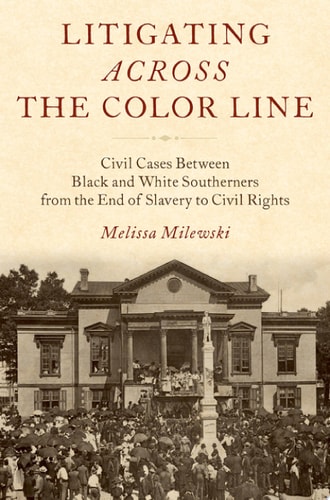
Litigating Across the Color Line
0
0
As an Amazon Associate and affiliate partner, Menrva Books earns from qualifying purchases. Learn more
Author Description
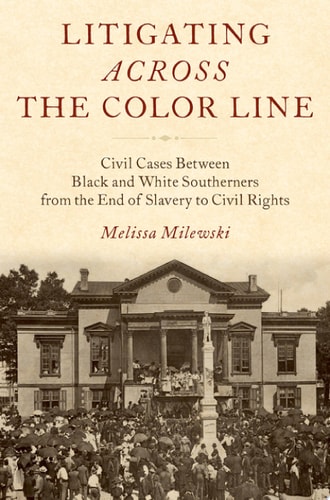
As a result of the violence, segregation, and disfranchisement that occurred throughout the South in the decades after Reconstruction, it has generally been assumed that African Americans in the post-Reconstruction South litigated few civil cases and faced widespread inequality in the suits they did pursue. In this groundbreaking work, Melissa Milewski shows that black men and women were far more able to negotiate the southern legal system during the era of Jim Crow than previously realized. She explores how, when the financial futures of their families were on the line, black litigants throughout the South took on white southerners in civil suits and, at times, succeeded in finding justice in the Southern courts. Between 1865 and 1950, in almost a thousand civil cases across eight southern states, former slaves took their former masters to court, black sharecroppers litigated disputes against white landowners, and African Americans with little formal education brought disputes against wealthy white members of their communities. As black southerners negotiated a legal system with almost all white gate-keepers, they found that certain kinds of cases were much easier to gain whites' support for than others. But in the suits they were able to litigate, they displayed pragmatism and a savvy understanding of how to get whites on their side. Their negotiation of this system proved surprisingly successful: in the civil cases African Americans litigated in the highest courts of eight states, they won more than half of their suits against whites throughout this period. Litigating Across the Color Line shows that in a tremendously constrained environment where they were often shut out of other government institutions, seen as racially inferior, and often segregated, African Americans found a way to fight for their rights in one of the only ways they could. Through these suits, they adapted and at times made a biased system work for them under enormous constraints.
Menrva's Summary
THE THESIS
This work investigates the extent to which African Americans in the post-Reconstruction South utilized the civil court system to challenge white southerners and secure legal victories despite systemic racial inequality. Melissa Lambert Milewski, a legal historian, analyzes nearly one thousand civil cases spanning eight southern states between 1865 and 1950. By examining court records and litigation outcomes, she argues that black litigants displayed significant pragmatism and strategic acumen, successfully navigating a biased legal framework to protect their financial interests and family futures.
THE SCOPE MAP
What You Will Find
- Analysis of nearly one thousand civil cases involving black litigants against white opponents.
- Examination of litigation strategies used by sharecroppers, former slaves, and uneducated plaintiffs.
- Quantitative data regarding win rates in state supreme courts across eight southern states.
Scope Limits
- The study focuses primarily on civil litigation rather than criminal proceedings.
- The research is confined to the period between 1865 and 1950.
THE AUTHORITY PERSPECTIVE
Scholars and historians recognize this text as a significant contribution to the understanding of agency within the Jim Crow legal system. Readers frequently note the meticulous archival research and the surprising statistical findings that challenge traditional narratives of total disenfranchisement in southern courts.
Page Count:
0
Publication Date:
2018-01-01
Publisher:
New York, NY : Oxford University Press,
ISBN-10:
0190249196
ISBN-13:
9780190249199
History
Cases
Southern History
Jim Crow Era
Legal History
Civil Rights
African American
Community Tags
Similar Books