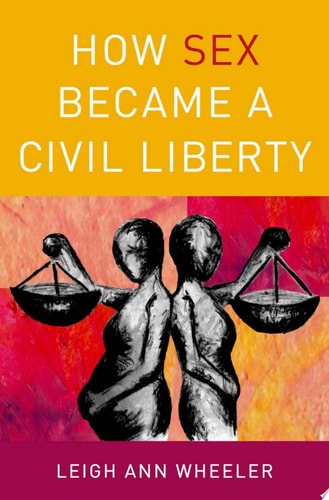
How Sex Became a Civil Liberty
0
0
As an Amazon Associate and affiliate partner, Menrva Books earns from qualifying purchases. Learn more
Author Description
How Sex Became a Civil Liberty is the first book to show how and why we have come to see sexual expression, sexual practice, and sexual privacy as fundamental rights. Using rich archival sources and oral interviews, historian Leigh Ann Wheeler shows how the private lives of women and men in the American Civil Liberties Union shaped their understanding of sexual rights as they built the constitutional foundation for the twentieth-century's sexual revolutions.Wheeler introduces readers to a number of fascinating figures, including ACLU founders Crystal Eastman and Roger Baldwin; nudists, victims of involuntary sterilization, and others who appealed to the organization for help; as well as attorneys like Dorothy Kenyon, Harriet Pilpel, and Melvin Wulf, who pushed the ACLU to tackle such controversial issues as abortion and homosexuality. It demonstrates how their work with the American Birth Control League, Planned Parenthood Federation, Kinsey Institute, Playboy magazine, and other organizations influenced the ACLU's agenda.Wheeler explores the ACLU's prominent role in nearly every major court decision related to sexuality while examining how the ACLU also promoted its agenda through grassroots activism, political action, and public education. She shows how the ACLU helped to collapse distinctions between public and private in ways that privileged access to sexual expression over protection from it. Thanks largely to the organization's work, abortion and birth control are legal, coerced sterilization is rare, sexually explicit material is readily available, and gay rights are becoming a reality. But this book does not simply applaud the creation of a sex-saturated culture and the arming of citizens with sexual rights; it shows how hard-won rights for some often impinged upon freedoms held dear by others.
Menrva's Summary
THE THESIS
This book investigates the historical transformation of sexual expression, practice, and privacy into recognized civil liberties within the United States. Historian Leigh Ann Wheeler utilizes archival records and oral histories to document how the American Civil Liberties Union (ACLU) navigated the intersection of private morality and constitutional law. The work argues that the organization's internal debates and external advocacy were instrumental in establishing the legal frameworks that define modern sexual rights.
THE SCOPE MAP
What You Will Find
- Analysis of major court decisions regarding sexuality and civil rights.
- Profiles of key figures including Crystal Eastman, Roger Baldwin, and Dorothy Kenyon.
- Examination of the ACLU's partnerships with organizations like Planned Parenthood and the Kinsey Institute.
- Discussion of the tension between individual sexual freedoms and competing social values.
Scope Limits
- The text focuses primarily on the institutional history of the ACLU rather than a comprehensive history of all American sexual movements.
- It does not provide an exhaustive legal analysis of every relevant Supreme Court case, focusing instead on the organization's strategic influence.
THE AUTHORITY PERSPECTIVE
Scholars and historians recognize this work as a significant contribution to the study of American civil rights and the evolution of privacy law. Readers frequently note the meticulous archival research and the balanced approach the author takes when discussing the complex trade-offs inherent in the expansion of sexual liberties.
Page Count:
352
Publication Date:
2014-09-01
Publisher:
Oxford University Press
ISBN-10:
0190206527
ISBN-13:
9780190206529
History
Sociology
Legal History
Sex
American History
Civil Rights
United States
Gender Studies
Community Tags
Other Editions(3)
Similar Books







Reader Comments
Share Your Thoughts
No comments yet. Be the first to share your thoughts!