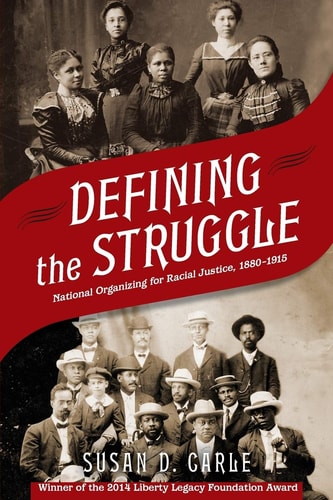
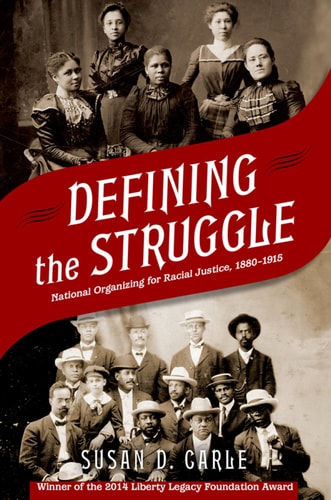
Defining the Struggle: National Organizing for Racial Justice, 1880-1915
0
0
As an Amazon Associate and affiliate partner, Menrva Books earns from qualifying purchases. Learn more
Author Description
Since its founding in 1910--the same year as another national organization devoted to the economic and social welfare aspects of race advancement, the National Urban League--the NAACP has been viewed as the vanguard national civil rights organization in American history. But these two flagship institutions were not the first important national organizations devoted to advancing the cause of racial justice. Instead, it was even earlier groups -- including the National Afro American League, the National Afro American Council, the National Association of Colored Women, and the Niagara Movement - that developed and transmitted to the NAACP and National Urban League foundational ideas about law and lawyering that these latter organizations would then pursue.With unparalleled scholarly depth, Defining the Struggle explores these forerunner organizations whose contributions in shaping early twentieth century national civil rights organizing have largely been forgotten today. It examines the motivations of their leaders, the initiatives they undertook, and the ideas about law and racial justice activism they developed and passed on to future generations. In so doing, it sheds new light on how these early origins helped set the path for twentieth century legal civil rights activism in the United States.
Menrva's Summary
THE THESIS
This book investigates the origins of national civil rights organizing in the United States by examining the foundational groups that preceded the NAACP and the National Urban League between 1880 and 1915. Susan D. Carle, a legal scholar, utilizes archival research and historical analysis to demonstrate how early organizations established the legal strategies and ideological frameworks that defined subsequent twentieth-century activism. By tracing the evolution of these groups, the text argues that modern civil rights efforts are deeply rooted in the intellectual and tactical labor of earlier, often overlooked, institutions.
THE SCOPE MAP
What You Will Find
- Historical analysis of the National Afro American League, the National Afro American Council, the National Association of Colored Women, and the Niagara Movement.
- Examination of the development of legal strategies and lawyering practices in the context of racial justice.
- Analysis of the transition of organizational leadership and ideology from the late nineteenth century to the early twentieth century.
Scope Limits
- The study focuses primarily on national-level organizations rather than local or grassroots community movements.
- The narrative concludes around 1915, leaving the later developments of the mid-twentieth-century civil rights movement outside the primary scope of this investigation.
THE AUTHORITY PERSPECTIVE
Scholars and historians recognize this work as a rigorous contribution to the history of American civil rights law and organizational development. Readers frequently note the academic density of the prose, which provides a comprehensive look at the intellectual lineage of racial justice activism.
Page Count:
424
Publication Date:
2015-06-01
Publisher:
Oxford University Press
ISBN-10:
0190235241
ISBN-13:
9780190235246
History
Legal History
Civil Rights
United States
Sociology
African American
Community Tags
Other Editions(3)

Similar Books