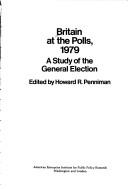
Britain at the Polls, 1992
0
0
As an Amazon Associate and affiliate partner, Menrva Books earns from qualifying purchases. Learn more
Author Description
How could an incumbent party, saddled with a controversial leader, whose personal unpopularity was reaching new lows, manage to engineer an electoral victory in the face of a painful and persistent economic recession? After nearly a generation in power, where did the Conservatives find the political will to shed the cumbersome mantle of Thatcherism and defeat the combined challenges of a rejuvenated Labour party and a newly energised centre party? Why did the voters in Britain, in defiance both of conventional wisdom and of most pollsters, choose to cap a long and remarkably volatile campaign season by awarding to the party of cold competence an unprecedented fourth consecutive Parliamentary majority? And how is this extraordinary electoral mandate likely to affect future prospects for the competitive two-party system of governance that has characterised politics in Britain since the end of World War II? In Britain at the Polls, 1992, Anthony King leads a number of prominent political scientists whose analyses of the most recent general election serve to put both the process and the results into a broad context of contemporary politics. The discussion begins with IVOR CREWE's perceptive evaluation of the immediate electoral impact of Margaret Thatcher's personality and policies and the ironic dimensions of her economic, social, and cultural legacies. The fifteen-year reign of the "Iron Lady" and her abrupt replacement by John Major wrought distinct changes in the Conservative party, as PHILIP NORTON explains in tracing the evolution of the dominant governing faction from 1979 to the present. PATRICK SEYD examines the process of reappraisal and realignment that transformed Labour, during more than a decade out of power, into a strong, if ultimately unsuccessful, challenger for control of the national political agenda. The centre itself saw great upheaval during the Thatcher era, and DAVID DENVER explores the developmental progress from the old Liberal party, thro
Menrva's Summary
THE THESIS
The 1992 British general election defied conventional wisdom and pollster predictions, leading to an unprecedented fourth consecutive majority for the incumbent Conservative party. The book investigates how a party with a controversial leader and facing economic recession managed to secure victory, and how the Conservatives shed Thatcherism to defeat a revitalized Labour party and a new centre party. It explores the voters' choices and the implications for Britain's post-World War II two-party system. The analysis delves into the immediate electoral impact of Margaret Thatcher's personality and policies, the evolution of the Conservative party under John Major, and the transformation of the Labour party during its time out of power.
THE SCOPE MAP
- Analysis of the immediate electoral impact of Margaret Thatcher's personality and policies.
- Tracing the evolution of the dominant governing faction of the Conservative party from 1979 to 1992.
- Examination of the process of reappraisal and realignment that transformed the Labour party.
- Exploration of the developmental progress of the centre parties from the old Liberal party.
- Contextualization of the 1992 general election within the broad scope of contemporary British politics.
- Discussion of the political will required to shed Thatcherism and achieve electoral victory.
- Analysis of the voters' defiance of conventional wisdom and pollster predictions.
THE AUTHORITY PERSPECTIVE
This collection of analyses by prominent political scientists offers a comprehensive examination of the 1992 British general election. The contributors dissect the surprising victory of the Conservative party, exploring the factors that led to an unexpected outcome against prevailing economic and political trends. The book is structured to provide context for the election results, examining the legacies of key political figures and the transformations within the major political parties. It serves as a detailed post-mortem on a pivotal moment in recent British political history.
Page Count:
256
Publication Date:
1993-01-01
ISBN-10:
0934540969
History
Politics
Non-Fiction
Elections
British Politics
Community Tags
Similar Books