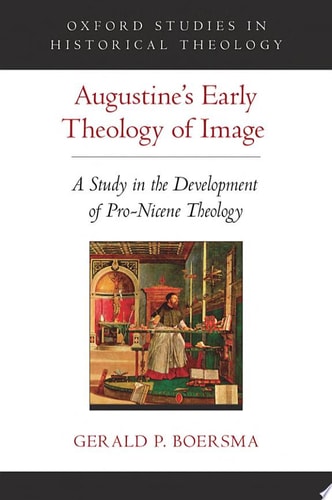
Augustine's Early Theology of Image
0
0
As an Amazon Associate and affiliate partner, Menrva Books earns from qualifying purchases. Learn more
Author Description
What Does It Mean For Christ To Be The Image Of God? And, If Christ Is The Image Of God, Can The Human Person Also Unequivocally Be Understood To Be The Image Of God? Augustine's Early Theology Of Image Examines Augustine's Conception Of The Imago Dei And Makes The Case That It Represents A Significant Departure From The Latin Pro-nicene Theologies Of Hilary Of Poitiers, Marius Victorinus, And Ambrose Of Milan Only A Generation Earlier. Augustine's Predecessors Understood The Imago Dei Principally As A Christological Term Designating The Unity Of Divine Substance. But, Gerald P. Boersma Argues, Augustine Affirms That Christ Is An Image Of Equal Likeness, While The Human Person Is An Image Of Unequal Likeness. Boersma's Careful Study Thus Argues That A Platonic And Participatory Evaluation Of The Nature Of Image Enables Augustine's Early Theology Of The Image Of God To Move Beyond That Of His Latin Predecessors And Affirm The Imago Dei Both Of Christ And Of The Human Person.
Menrva's Summary
THE THESIS
How does Augustine of Hippo reconcile the theological status of Christ as the Image of God with the human person's status as the imago Dei? Gerald P. Boersma, a scholar of patristic theology, investigates Augustine's early writings to demonstrate a shift in the conceptualization of the image of God. He argues that Augustine moves beyond the Latin Pro-Nicene tradition by utilizing a Platonic and participatory framework to distinguish between Christ as an image of equal likeness and humanity as an image of unequal likeness.
THE SCOPE MAP
What You Will Find
- Comparative analysis of Augustine against Hilary of Poitiers, Marius Victorinus, and Ambrose of Milan
- Examination of the ontological distinction between divine and human participation in the image of God
- Application of Platonic metaphysical categories to early Christian doctrine
Scope Limits
- The study focuses primarily on Augustine's early theological development rather than his later mature works
- The analysis is restricted to the Latin tradition and does not provide an exhaustive survey of Greek patristic perspectives
THE AUTHORITY PERSPECTIVE
Scholars recognize this work as a precise contribution to the study of Augustinian metaphysics and early Latin Trinitarian theology. Readers frequently note the academic density of the prose, which is intended for those with a background in patristic studies or historical theology.
Page Count:
336
Publication Date:
2015-01-01
Publisher:
Oxford University Press
ISBN-10:
0190251379
ISBN-13:
9780190251376
Philosophy
Patristics
Theology
Augustine of Hippo
Christian History
Community Tags
Similar Books