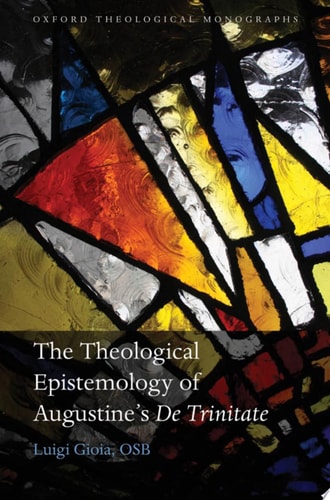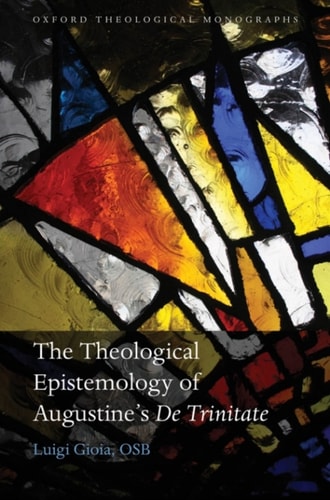
The Theological Epistemology of Augustine's De Trinitate
0
0
As an Amazon Associate and affiliate partner, Menrva Books earns from qualifying purchases. Learn more
Author Description
Luigi Gioia provides a fresh description and analysis of Augustine's monumental treatise, De Trinitate, working on a supposition of its unity and its coherence from structural, rhetorical, and theological points of view. The main arguments of the treatise are reviewed first: Scripture and the mystery of the Trinity; discussion of 'Arian' logical and ontological categories; a comparison between the process of knowledge and formal aspects of the confession of the mystery of the Trinity; an account of the so called 'psychological analogies'. These topics hold a predominantly instructive or polemical function. The unity and the coherence of the treatise become apparent especially when its description focuses on a truly theological understanding of knowledge of God: Augustine aims at leading the reader to the vision and enjoyment of God the Trinity, in whose image we are created. This mystagogical aspect of the rhetoric of De Trinitate is unfolded through Christology, soteriology, doctrine of the Holy Spirit and doctrine of revelation. At the same time, from the vantage point of love, Augustine detects and powerfully depicts the epistemological consequences of human sinfulness, thus unmasking the fundamental deficiency of received theories of knowledge. Only love restores knowledge and enables philosophers to yield to the injunction which resumes philosophical enterprise as a whole, namely 'know thyself'.
Menrva's Summary
THE THESIS
How does Augustine’s De Trinitate integrate theological doctrine with an epistemological framework to guide the reader toward the knowledge of God? Luigi Gioia, a Benedictine monk and scholar, argues that the treatise possesses a profound structural and rhetorical unity often overlooked by fragmented readings. By examining the interplay between Christology, soteriology, and the doctrine of the Holy Spirit, Gioia demonstrates that Augustine’s work is not merely a polemical defense of orthodoxy but a deliberate mystagogical exercise designed to transform the reader's capacity for divine encounter.
THE SCOPE MAP
What You Will Find
- A comprehensive analysis of the structural and rhetorical coherence of De Trinitate.
- An examination of Augustinian epistemological responses to Arian logical categories.
- A detailed study of the 'psychological analogies' and their role in the doctrine of the Trinity.
- An exploration of the relationship between human sinfulness, love, and the possibility of true knowledge.
Scope Limits
- The text does not provide a general biography of Augustine or a broad history of the early Church.
- The analysis is focused specifically on the epistemological and theological dimensions of the cited treatise rather than a comparative study of all Augustinian works.
THE AUTHORITY PERSPECTIVE
Scholars and theologians identify this work as a significant contribution to the study of Augustinian thought, particularly for its focus on the unity of the text. Readers frequently note the academic density of the prose, which requires a strong background in patristic theology and classical philosophy to fully appreciate.
Page Count:
352
Publication Date:
2008-01-01
Publisher:
OUP Oxford
ISBN-10:
019156477X
ISBN-13:
9780191564772
Religion
Philosophy
Epistemology
Theology
Christian History
Patristics
Trinity