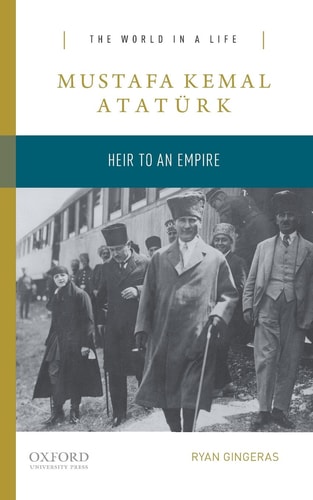
Mustafa Kemal Atatürk: Heir to an Empire
0
0
As an Amazon Associate and affiliate partner, Menrva Books earns from qualifying purchases. Learn more
Author Description
Part of The World in a Life series, this brief text provides insight into the life of Mustafa Kemal Atatürk. By the outbreak of World War II, the Republic of Turkey epitomized more than a state bound for better times; it aspired to represent the essence of modern politics in the twentieth century. To contemporaries of this period, Mustafa Kemal Atatürk--the country's first president--was both the muse and the architect of this radical transformation. By the time of his death in 1938, he was regularly compared alongside other luminary statesmen of the post-Versailles era. Outside of Turkey, his name was synonymous with bold leadership and ambitious reform. Atatürk's reputation as a man both progressive and iconoclastic greatly augmented his already lofty status as Turkey's premier general and war hero. Yet there were some aspects of his life presidency that tempered contemporary admiration for Mustafa Kemal. His acclaim and celebrity came with the understanding that he was a dictator with little patience for liberal democracy. Atatürk's inability to brook compromise and tolerate opposition engendered acts of violence and oppression that resulted in the deaths of large numbers of his fellow citizens. As a whole, the legacies of both his achievements and flaws as a leader remain critical to any understanding of modern-day Turkey.We live in a global age where big concepts like "globalization" often tempt us to forget the personal side of the past. The titles in The World in a Life series aim to revive these meaningful lives. Each one shows us what it was like to live on a world historical stage. Brief, inexpensive, and thematic, each book can be read in a week, fit within a wide range of curricula, and shed insight into a particular place or time. Four to six short primary sources at the end of each volume sharpen the reader's view of an individual's impact on world history.
Menrva's Summary
THE THESIS
This text investigates how Mustafa Kemal Atatürk functioned as both a modernizing architect and an authoritarian ruler during the formation of the Turkish Republic. Ryan Gingeras, a historian specializing in the Ottoman Empire and modern Turkey, utilizes a biographical framework to analyze the paradoxes of Atatürk’s leadership. The book argues that his legacy is defined by the tension between his radical progressive reforms and the violent suppression of political opposition that characterized his presidency.
THE SCOPE MAP
What You Will Find
- An analysis of the post-Versailles era in Turkey.
- A thematic examination of Atatürk’s role as a military hero and political leader.
- A collection of four to six primary source documents at the end of the volume.
Scope Limits
- The text is a brief, thematic overview rather than an exhaustive, multi-volume academic biography.
- It focuses primarily on the political and historical impact of his life rather than intimate personal details.
THE AUTHORITY PERSPECTIVE
Experts recognize this work as an accessible entry point for students and general readers interested in the complexities of twentieth-century Turkish state-building. Readers frequently note that the text successfully balances the narrative of Atatürk’s achievements with a critical examination of his authoritarian methods.
Page Count:
224
Publication Date:
2015-09-22
Publisher:
Oxford University Press
ISBN-10:
0190250011
ISBN-13:
9780190250010
Biography
History
Politics & Government
Turkey
Modern History
Turkey biography
Soldiers
Middle Eastern
Community Tags
Similar Books