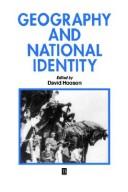
Geography and National Identity
0
0
As an Amazon Associate and affiliate partner, Menrva Books earns from qualifying purchases. Learn more
Author Description
This volume of especially commissioned essays explores the geography of - and the role of geography in - national and proto-national identity. Place and national identity are bound together. Attachment to the one is almost always inseparable from the sense of the other. Yet, as this volume shows, the articulated self-conscious linking of place and identity is by and large a modern phenomenon that took root in nineteenth-century Europe. The formation of supra-national states and the much vaunted globalization of culture led many to believe there would be a progressive dilution of national identities and a growing agglomeration of places and nations into larger state units. Precisely the reverse has taken place. The contributors to this book explore the connections between identity and homeland. They show how a place may be perceived as archetypal, endowed with love and celebrated in music and poetry, yet be a pretext for violence and war. They examine the evolution of ideas about identity and their manifestation in a wide variety of settings, from the former Soviet Union to the island states of the South Pacific. Resurgent national identities and their homelands - and the problems associated with their realization - have been and will be with us for a long time: this book throws light on what they are, what they mean, and how they came to be.
Menrva's Summary
THE THESIS
This volume investigates the intricate relationship between geography and the formation of national identity. The book posits that while attachment to place and national identity are deeply intertwined, the conscious articulation of this link is a relatively modern phenomenon, largely emerging in nineteenth-century Europe. Despite predictions of a dilution of national identities due to globalization and the formation of supra-national states, the contributors demonstrate a resurgence of these identities. The essays explore how places are perceived as archetypal, celebrated in art and music, yet can also become pretexts for conflict, examining this dynamic across diverse settings from the former Soviet Union to the South Pacific.
THE SCOPE MAP
- Exploration of the geography of national identity.
- Analysis of the role of geography in proto-national identity formation.
- Examination of the modern phenomenon of linking place and identity.
- Discussion on the resurgence of national identities despite globalization.
- Case studies on how places are perceived as archetypal and their connection to conflict.
- Analysis of the evolution of ideas about identity and their manifestation in various global settings.
THE AUTHORITY PERSPECTIVE
This collection of essays, edited by David Lowenthal, delves into the complex interplay between geography and national identity, a topic that gained prominence in the 19th century. The contributors examine how the perception of a homeland, often idealized in culture, can paradoxically fuel both deep affection and violent conflict. The book's scope spans diverse regions, from the former Soviet Union to the South Pacific, offering insights into the evolution and manifestation of national identities.
Page Count:
391
Publication Date:
1994-01-01
ISBN-10:
0631189351
ISBN-13:
9780631189350
Politics
History
Non-Fiction
Sociology
Community Tags
Similar Books