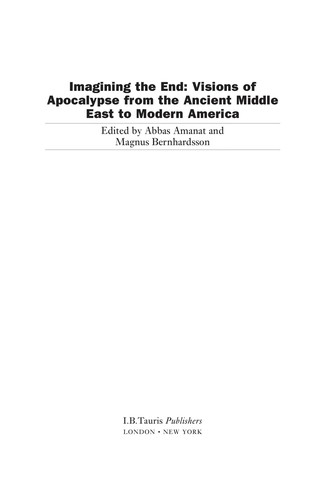
Imagining the End
0
0
As an Amazon Associate and affiliate partner, Menrva Books earns from qualifying purchases. Learn more
Author Description
The apocalypse is a theme common to all major monotheistic religions that have emerged from the Middle East. While this vision has expressed itself in different ways in each of the four monotheistic traditions of Judaism, Zoroastrianism, Christianity and Islam, the phenomenon is intrinsically similar. Exploring a range of ancient and modern cultural and religious experiences, and drawing on the interdisciplinary research of a group of scholars, this book highlights the importance of millennial and apocalyptic paradigms and their historical expressions in diverse settings. It demonstrates how visions of the End and eschatological scenarios - particularly the cycles of destruction and renewal in the canons of the major religions of the Middle East - have generated complex interpretations in cultures as diverse as early Judaism, classical Islam, medieval Europe, Africa, China, Iran and the United States. In the American context, unusually rich for religious experimentation, such motifs have given rise to prophetic visions and millennial hopes. What is the history of Millennialism? In what ways can patterns or phenomena that link the four faiths be discerned? Why has millennialism so p.
Menrva's Summary
THE THESIS
This book investigates the historical and cross-cultural expressions of apocalyptic and millennial thought across major monotheistic religions and diverse global settings. The author, Abbas Amanat, draws on interdisciplinary research to explore how visions of the End, including cycles of destruction and renewal, have generated complex interpretations in Judaism, Zoroastrianism, Christianity, and Islam. The book examines these motifs in various cultural contexts, from early Judaism and classical Islam to medieval Europe, Africa, China, Iran, and the United States, highlighting the unique role of religious experimentation in the American context.
THE SCOPE MAP
- The historical development and cross-cultural expressions of apocalyptic and millennial thought.
- Comparative analysis of these themes within Judaism, Zoroastrianism, Christianity, and Islam.
- Exploration of eschatological scenarios and cycles of destruction and renewal.
- Case studies from diverse global settings including early Judaism, classical Islam, medieval Europe, Africa, China, Iran, and the United States.
- The influence of millennial motifs on prophetic visions and hopes, particularly in the American context.
- An examination of the patterns and phenomena linking the four major Middle Eastern monotheistic faiths.
THE AUTHORITY PERSPECTIVE
The book is recognized for its comprehensive exploration of apocalyptic and millennial themes across major monotheistic religions and diverse global cultures. It highlights the interdisciplinary approach taken by a group of scholars to demonstrate the significance of these paradigms and their historical expressions. The work is noted for its examination of how visions of the End have generated complex interpretations in varied cultural settings, including a specific focus on the American context and its unique millennial hopes. The book aims to answer fundamental questions about the history of millennialism and its connections across different faiths.
Page Count:
416
Publication Date:
2002-01-01
ISBN-10:
1860647243
Religion
Non-Fiction
History
Sociology
Community Tags
Similar Books