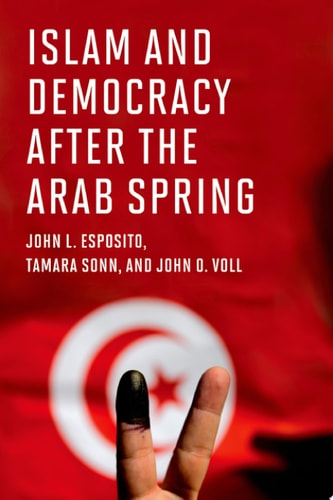
Islam and Democracy after the Arab Spring
0
0
As an Amazon Associate and affiliate partner, Menrva Books earns from qualifying purchases. Learn more
Author Description
The landscape of the Middle East has changed dramatically since 2011, as have the political arena and the discourse around democracy. In Islam and Democracy after the Arab Spring, John L. Esposito, John Voll, and Tamara Sonn examine the state of democracy in Muslim-majority societies today. Applying a twenty-first century perspective to the question of whether Islam is "compatible" with democracy, they redirect the conversation toward a new politics of democracy that transcends both secular authoritarianism and Political Islam.While the opposition movements of the Arab Spring vary from country to country, each has raised questions regarding equality, economic justice, democratic participation, and the relationship between Islam and democracy in their respective countries. Does democracy require a secular political regime? Are religious movements the most effective opponents of authoritarian secularist regimes? Esposito, Voll, and Sonn examine these questions and shed light on how these opposition movements reflect the new global realities of media communication and sources of influence and power. Positioned for a broad readership of scholars and students, policy-makers, and media experts, Islam and Democracy after the Arab Spring will quickly become a go-to for all who watch the Middle East, inside and outside of academia.
Menrva's Summary
THE THESIS
This work investigates the evolving relationship between Islamic political movements and democratic governance in the wake of the 2011 Arab Spring uprisings. The authors, all established scholars in Islamic studies and Middle Eastern politics, utilize a comparative framework to challenge the binary assumption that Islam and democracy are inherently incompatible. They argue that the post-2011 political landscape necessitates a shift in discourse, moving away from outdated secular-versus-religious paradigms toward a more nuanced understanding of democratic participation in Muslim-majority societies.
THE SCOPE MAP
What You Will Find
- Comparative analysis of political movements across various Middle Eastern nations
- Examination of the role of media and digital communication in modern political mobilization
- Theoretical framework for evaluating democratic participation beyond secular authoritarianism
- Assessment of economic justice and equality as drivers of political change
Scope Limits
- Does not provide a comprehensive history of every individual nation involved in the Arab Spring
- Does not offer predictive modeling for future political outcomes in the region
THE AUTHORITY PERSPECTIVE
Experts recognize this text as a significant contribution to the study of contemporary Middle Eastern politics, particularly for its effort to modernize the debate on religious-secular political dynamics. Readers frequently note the academic rigor of the prose, making it a standard reference for students and policy-makers seeking to understand the complexities of post-2011 regional shifts.
Page Count:
320
Publication Date:
2015-01-01
Publisher:
Oxford University Press
ISBN-10:
0190263784
ISBN-13:
9780190263782
Religion
Religious Aspects
Middle Eastern
Democracy
Middle East
Islam
International relations
Sociology
Community Tags
Similar Books