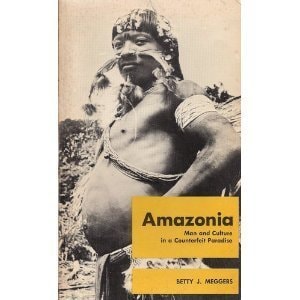
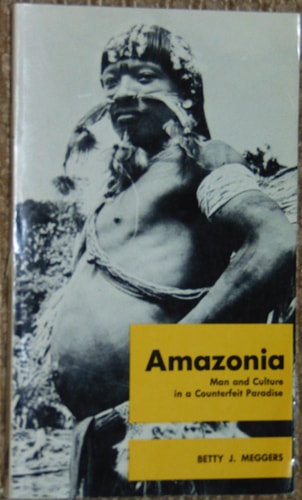
Amazonia: Man and Culture in a Counterfeit Paradise
0
0
As an Amazon Associate and affiliate partner, Menrva Books earns from qualifying purchases. Learn more
Author Description
When first published in 1971, Amazonia was a pioneering contribution to the emerging field of cultural ecology. Betty Meggers argued that the Amazon's luxurious vegetation concealed significant limitations for human exploitation, placing a ceiling on pre-Columbian population density and social complexity. This controversial view has implications for academic anthropology and also relates to the modern development of Amazonia, including attempts to introduce sustainable methods of intensive exploitation.Amazonia in this revised new edition includes recent biological and climatic data. Ethnographic and archaeological evidence reemphasize the complexity of the ecosystem and broaden our understanding of past and present sophisticated adaptations among indigenous groups.
Menrva's Summary
THE THESIS
This work investigates the extent to which the Amazonian environment dictates the limits of human social complexity and population density. Betty J. Meggers, a prominent anthropologist, utilizes archaeological and ethnographic data to argue that the region's ecosystem is a counterfeit paradise, where lush vegetation masks significant agricultural constraints. By applying the framework of cultural ecology, she demonstrates how environmental factors historically restricted the development of large-scale civilizations in the Amazon basin.
THE SCOPE MAP
What You Will Find
- Analysis of pre-Columbian population density and social organization.
- Application of cultural ecology to tropical rainforest environments.
- Integration of biological and climatic data to explain human adaptation.
- Evaluation of sustainable development challenges in modern Amazonia.
THE AUTHORITY PERSPECTIVE
Experts recognize this text as a foundational, albeit controversial, contribution to the study of human-environment interaction in the tropics. Readers frequently note the academic density of the prose and the significant impact the author's environmental determinism has had on subsequent anthropological debates.
Page Count:
182
Publication Date:
1971-01-01
Publisher:
Aldine, Atherton
ISBN-10:
0202010163
ISBN-13:
9780202010168
Anthropology
Adaptation Biology
South America
Archaeology
Community Tags
Other Editions(3)

Similar Books