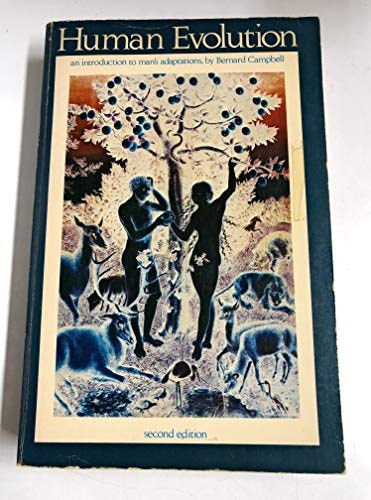
Human Evolution
0
0
As an Amazon Associate and affiliate partner, Menrva Books earns from qualifying purchases. Learn more
Author Description
In this new fourth edition, Campbell has revised and updated his classic introduction to the field. Human Evolution synthesizes the major findings of modern research and theory and presents a complete and integrated account of the evolution of human beings. New developments in microbiology and recent fossil records are incorporated into the enormous range of this volume, with the resulting text as lucid and comprehensive as earlier editions.The fourth edition retains the thematic structure and organization of the third, with its cogent treatment of human variability and speciation, primate locomotion, and nonverbal communication and the evolution of language, supported by more than 150 detailed illustrations and an expanded and updated glossary and bibliography. As in prior editions, the book treats evolution as a concomitant development of the main behavioral and functional complexes of the genus Homo among them motor control and locomotion, mastication and digestion, the senses and reproduction. It analyzes each complex in terms of its changing function, and continually stresses how the separate complexes evolve interdependently over the long course of the human journey.All these aspects are placed within the context of contemporary evolutionary and genetic theory, analyses of the varied extensions of the fossil record, and contemporary primatology and comparative morphology. The result is a primary text for undergraduate and graduate courses, one that will also serve as required reading for anthropologists, biologists, and nonspecialists with an interest in human evolution.
Menrva's Summary
THE THESIS
This volume investigates the biological and behavioral trajectory of the genus Homo through an integrated synthesis of modern evolutionary theory and fossil evidence. Bernard Campbell, a distinguished scholar in the field, leverages his extensive background in anthropology and primatology to construct a comprehensive framework. He examines human development not as a series of isolated events, but as a complex, interdependent evolution of functional systems including locomotion, mastication, and social structure. The text serves as a rigorous academic resource that bridges the gap between specialized research and foundational biological principles.
THE SCOPE MAP
What You Will Find
- Detailed analysis of primate radiation and the evolution of the genus Homo.
- Examination of functional complexes such as motor control, digestion, and reproductive strategies.
- Integration of contemporary genetic theory and recent fossil record discoveries.
- Exploration of the development of nonverbal communication and the origins of language.
THE AUTHORITY PERSPECTIVE
Experts and academics frequently cite this work as a foundational text for students of anthropology and biology due to its systematic organization and clarity. Readers often note the academic density of the prose, which effectively synthesizes complex morphological and genetic data for both undergraduate study and professional reference.
Page Count:
469
Publication Date:
1978-01-01
Publisher:
Aldine de Gruyter
ISBN-10:
0202020134
ISBN-13:
9780202020136
Science
Evolutionary Biology
Paleontology
Anthropology
textbook
Community Tags
Other Editions(3)

Similar Books