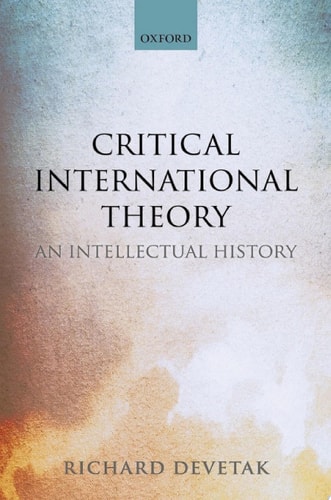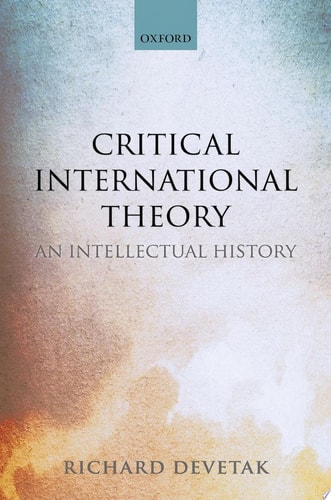
Critical International Theory
0
0
As an Amazon Associate and affiliate partner, Menrva Books earns from qualifying purchases. Learn more
Author Description
Whether Inspired By The Frankfurt School Or Antonio Gramsci, The Impact Of Critical Theory On The Study Of International Relations Has Grown Considerably Since Its Advent In The Early 1980s. This Book Offers The First Intellectual History Of Critical International Theory. Richard Devetak Approaches This History By Locating Its Emergence In The Rising Prestige Of Theory And The Theoretical Persona. As Theory's Prestige Rose In The Discipline Of International Relations It Opened The Way For Normative And Metatheoretical Reconsiderations Of The Discipline And The World. The Book Traces The Lines Of Intellectual Inheritance Through The Frankfurt School To The Enlightenment, German Idealism, And Historical Materialism, To Reveal The Construction Of A Particular Kind Of Intellectual Persona: The Critical International Theorist Who Has Mastered Reflexive, Dialectical Forms Of Social Philosophy.. In Addition To The Extensive Treatment Of Critical Theory's Reception And Development In International Relations, The Book Recovers A Rival Form Of Theory That Originates Outside The Usual Inheritance Of Critical International Theory In Renaissance Humanism And The Civil Enlightenment. This Historical Mode Of Theorising Was Intended To Combat Metaphysical Encroachments On Politics And International Relations And To Prioritise The Mundane Demands Of Civil Government Over The Self-reflective Demands Of Dialectical Social Philosophies. By Proposing Contextualist Intellectual History As A Form Of Critical Theory, Critical International Theory Defends A Mode Of Historical Critique That Refuses The Normative Temptations To Project Present Conceptions Onto An Alien Past, And To Abstract From The Offices Of Civil Government.
Menrva's Summary
THE THESIS
This book investigates the intellectual history and development of critical theory within the discipline of international relations. Richard Devetak, a scholar of international relations, examines how the rising prestige of theoretical work enabled normative and metatheoretical shifts in the field. He argues that the critical international theorist has emerged as a specific intellectual persona shaped by dialectical social philosophy, while simultaneously proposing a rival, historically-grounded mode of critique rooted in Renaissance humanism.
THE SCOPE MAP
What You Will Find
- Intellectual lineage tracing from the Frankfurt School back to German Idealism and historical materialism.
- A comparative analysis between dialectical social philosophy and Renaissance humanism.
- An argument for contextualist intellectual history as a legitimate form of critical practice.
Scope Limits
- The text does not provide a comprehensive survey of all contemporary international relations theories outside the critical tradition.
- It does not offer a practical policy manual for current international governance.
THE AUTHORITY PERSPECTIVE
Scholars recognize this work as a significant contribution to the historiography of international relations theory. Experts frequently note the academic density of the prose, which is intended for advanced students and researchers in political philosophy.
Page Count:
264
Publication Date:
2018-01-01
Publisher:
Oxford University Press
ISBN-10:
0192556606
ISBN-13:
9780192556608
Philosophy
Intellectual History
Political Theory
International relations
Critical Theory
Community Tags
Similar Books