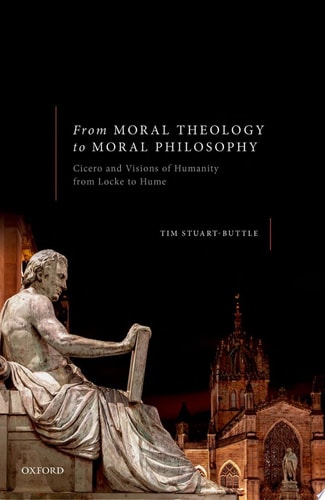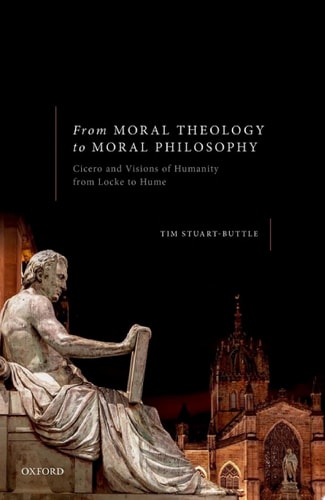
From Moral Theology to Moral Philosophy: Cicero and Visions of Humanity from Locke to Hume
0
0
As an Amazon Associate and affiliate partner, Menrva Books earns from qualifying purchases. Learn more
Author Description
The seventeenth and eighteenth centuries represent a period of remarkable intellectual vitality in British philosophy, as figures such as Hobbes, Locke, Hume, and Smith attempted to explain the origins and sustaining mechanisms of civil society. Their insights continue to inform how political and moral theorists think about the world in which we live. From Moral Theology to Moral Philosophy reconstructs a debate which preoccupied contemporaries but which seems arcane to us today. It concerned the relationship between reason and revelation as the two sources of mankind's knowledge, particularly in the ethical realm: to what extent, they asked, could reason alone discover the content and obligatory character of morality? This was held to be a historical, rather than a merely theoretical question: had the philosophers of pre-Christian antiquity, ignorant of Christ, been able satisfactorily to explain the moral universe? What role had natural theology played in their ethical theories - and was it consistent with the teachings delivered by revelation? Much recent scholarship has drawn attention to the early-modern interest in two late Hellenistic philosophical traditions - Stoicism and Epicureanism. Yet in the English context, three figures above all - John Locke, Conyers Middleton, and David Hume - quite deliberately and explicitly identified their approaches with Cicero as the representative of an alternative philosophical tradition, critical of both the Stoic and the Epicurean: academic scepticism. All argued that Cicero provided a means of addressing what they considered to be the most pressing question facing contemporary philosophy: the relationship between moral philosophy and moral theology.
Menrva's Summary
THE THESIS
This work investigates how seventeenth and eighteenth-century British philosophers utilized the legacy of Cicero to navigate the tension between reason and revelation in the construction of moral systems. Tim Stuart-Buttle, a scholar of intellectual history, examines the transition from moral theology to moral philosophy by analyzing the works of John Locke, Conyers Middleton, and David Hume. The author argues that these thinkers positioned themselves within the tradition of Ciceronian academic skepticism to address whether morality could be established through reason alone, independent of Christian revelation.
THE SCOPE MAP
What You Will Find
- An analysis of the intellectual debate regarding the sufficiency of reason in ethical discovery.
- A detailed examination of the influence of Stoicism, Epicureanism, and Ciceronian skepticism on early-modern British thought.
- A historical reconstruction of the relationship between natural theology and moral philosophy.
Scope Limits
- The study focuses primarily on the English context and the specific intellectual lineage of Locke, Middleton, and Hume.
- It does not provide a comprehensive survey of all European Enlightenment moral philosophy.
THE AUTHORITY PERSPECTIVE
Scholars recognize this text as a rigorous contribution to the history of ideas, particularly for its nuanced reading of how early-modern thinkers engaged with classical antiquity. Readers frequently note the academic density of the prose and the author's meticulous attention to the theological underpinnings of secular moral philosophy.
Page Count:
287
Publication Date:
2019-01-01
Publisher:
OUP Oxford
ISBN-10:
0192572539
ISBN-13:
9780192572530
Philosophy
Intellectual History
Philosophy history
Theology
Political Theory
Moral Philosophy
Community Tags
Similar Books