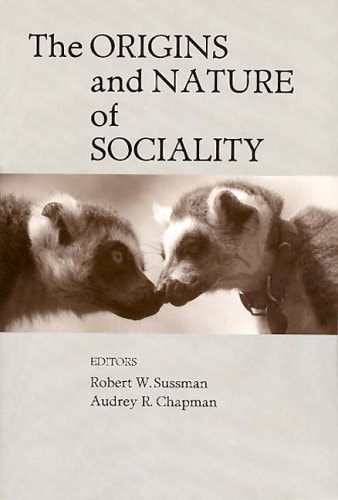
The Origins and Nature of Sociality
0
0
As an Amazon Associate and affiliate partner, Menrva Books earns from qualifying purchases. Learn more
Author Description
Scientific developments have increasingly been transforming our understanding of the place of human beings in nature. The study of humanity, carried out in a variety of disciplines from anthropology and paleontology to genetics and neurosciences, is shedding new light on the origins and biological bases of human nature and culture. The findings of these relatively new hyphenated sciences have profound implications for the interpretation of human behavior within spiritual life no less than the material culture. This fine compendium serves as a splendid introduction to sociobiology.Sociobiology, now frequently being referred to by many as evolutionary psychology and evolutionary anthropology, first offered a radically selfish and individualist account of human nature. However, later researchers have moved away from such reductionisms, and into a sense of the common good that characterizes many species, and human brings as well. The emergence of discourses on the role of religion in understanding behavior in terms of moral considerations that permit people to live in community contexts has generated a lively examination within the new social sciences on the source of instinct, impulse, intelligence and interest. This compendium is clearly etched in a new and generous vision of human behavior that is at the same time rooted in the best of the current social sciences.The Origins and Nature of Sociality comes out of a symposium sponsored by the Program for Dialogue on Science, Ethics, and Religion of the American Association for the Advancement of Science, and co-chaired by the editors. The contributors focus on the current status of research on sociality and the evolution of cooperative and altruistic behavior in nonhuman and human primates. They examine questions related to the evolution, cultural viability, and hormonal underpinnings of human sociality in specific detail, and describe patterns of sociality among nonhuman primates that many shed light on human social be
Menrva's Summary
THE THESIS
This work investigates the biological and evolutionary foundations of human sociality, specifically examining how cooperative and altruistic behaviors emerged across primate species. The text synthesizes research from anthropology, paleontology, genetics, and neuroscience to challenge earlier, reductionist models of human nature that prioritized individual selfishness. By integrating these diverse scientific perspectives, the contributors argue for a more nuanced understanding of social behavior that accounts for the common good and moral development.
THE SCOPE MAP
What You Will Find
- Comparative analysis of sociality patterns between human and nonhuman primates
- Examination of the hormonal and biological underpinnings of cooperative behavior
- Discussion on the intersection of evolutionary science, ethics, and religious discourse
- Synthesis of research from a symposium sponsored by the American Association for the Advancement of Science
THE AUTHORITY PERSPECTIVE
Experts recognize this volume as a significant contribution to the discourse on evolutionary anthropology and the shift away from purely individualistic models of human behavior. Readers frequently note the academic density of the prose, which serves as a rigorous introduction for those interested in the biological basis of social interaction.
Page Count:
352
Publication Date:
2004-04-30
Publisher:
Routledge
ISBN-10:
020230731X
ISBN-13:
9780202307312
Psychology
Science
Anthropology
Sociobiology
Evolutionary Biology
Community Tags
Other Editions(2)
Similar Books















Reader Comments
Share Your Thoughts
No comments yet. Be the first to share your thoughts!