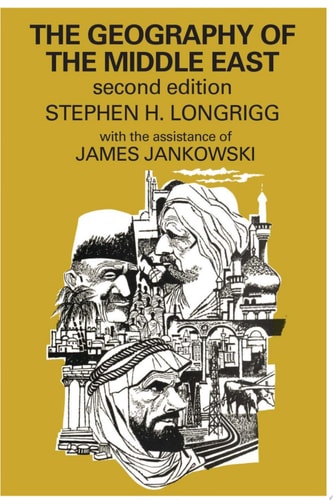
The Geography of the Middle East
0
0
As an Amazon Associate and affiliate partner, Menrva Books earns from qualifying purchases. Learn more
Author Description
Much of the Middle East is in a continuing state of visible, often revolutionary, change in almost every field--social, cultural, economic, political. Although time will have greatly modified the conditions here presented, the author emphasizes those aspects which, being the least ephemeral, were likely to remain valid for some years and indicates the areas in which the most change can be expected. Therefore, in evaluating any change that has occurred, the reader will at least be informed of the conditions out of which--or because of which--such an event occurred.In some cases Longrigg passes over important aspects of the Middle Eastern region and its component countries, almost or entirely in silence: among such aspects being those of military resources, prominent personalities, constitutional or legal issues, budgets and balances of trade. And even on matters upon which he has said something fairly specific--topography, races and languages, religions, climates, natural resources and agronomy, industry, communications--there may be too little detailed information to satisfy a reader desirous of a full picture of a given aspect of things in this or that territory. For most of such detail, and not less for an appreciation which may be widely different from the author's, the student can very easily look elsewhere: the literature of these countries is abundant and accessible.Longrigg's attempt has been to offer an objective but informed account of the different nationalities and social forces found in Middle Eastern environments, urban and rural, in terms of the particular circumstances, problems and hopes of the dozen separate and more or less divided states of the region. The non-specialist reader may from all this learn something true and perhaps suggestive, while the expert may find not too much to offend him.
Menrva's Summary
THE THESIS
This work investigates the foundational social, economic, and environmental conditions of the Middle East to provide a baseline for understanding the region's ongoing transformation. The authors, James P. Jankowski and Stephen H. Longrigg, synthesize regional data to offer an objective account of the diverse nationalities and social forces shaping the Middle Eastern landscape. By focusing on enduring structural elements rather than ephemeral political events, the text establishes a framework for analyzing the historical and cultural context of the region's development.
THE SCOPE MAP
What You Will Find
- Analysis of physical topography, climate, and natural resource distribution across the region.
- Examination of demographic factors including race, language, and religious composition.
- Overview of infrastructure, communications, and industrial development within the dozen states of the region.
- Comparative study of urban versus rural social environments and their respective economic challenges.
THE AUTHORITY PERSPECTIVE
Readers frequently note that while the text provides a broad, foundational overview, it intentionally omits specific legal, military, and budgetary details in favor of structural analysis. Experts highlight this as a useful introductory resource for non-specialists seeking to understand the historical conditions that preceded modern regional shifts.
Page Count:
324
Publication Date:
2009-02-15
Publisher:
Routledge
ISBN-10:
0202362965
ISBN-13:
9780202362960
History
Sociology
Middle East
Geography
Community Tags
Similar Books