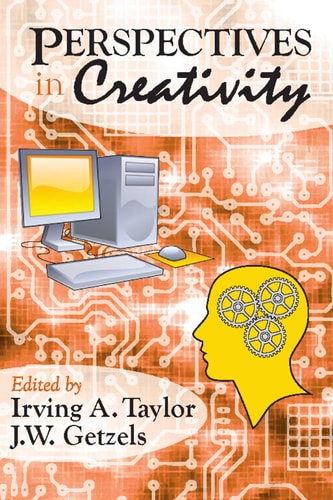
Perspectives in Creativity
0
0
As an Amazon Associate and affiliate partner, Menrva Books earns from qualifying purchases. Learn more
Author Description
In Perspectives in Creativity experts in the psychology of creativity take stock of the field by examining their own experiences. The contributors relate how they embarked on their work, how their ideas developed, what in their thinking remained the same, what had changed, and how they evaluate their successes and failures.The introductory chapter provides a historical context for subsequent contributions. J. P. Guilford then describes the development of the field of creativity from the perspective of the Structure of Intellect model. Donald W. MacKinnon describes his work at the Institute of Personality Assessment and Research. J. W. Getzels and Mihalyi Csikszentmihalyi recount in the following chapter how, though starting with a conception of creativity as a problem-solving process, they were driven through their work with artists to a conception of creativity as also a problem-finding process. In the fifth chapter, Frank M. Andrews describes his investigations of the social and psychological factors in scientific laboratories.Frank Barron examines the problem of creativity and alienation. Anne Roe analyzes the sources and development of paintings as reported by twenty artists. In the following chapter, Salvatore Maddi examines the widely held belief that social integration and a permissive environment are conducive to creative endeavor. In chapter 9, Calvin Taylor and Richard Ellison describe the development of the Utah program of assessment and intervention with regard to the creativity of children in the classroom. Next, Sidney Parnes discusses his work on "brainstorming" and its emphasis on a balance between imagination and judgment, freedom, and discipline. George Prince tells of the development of "synectics" since its early formulation and recounts its application to creative production in industry. E. Paul Torrance then examines recent creativity in the schools and describes his own efforts in devising diagnostic tests and educational methods.
Menrva's Summary
THE THESIS
This volume investigates the evolution of creativity research by synthesizing the personal and professional trajectories of leading psychologists in the field. Irving A. Taylor compiles a series of reflective essays from prominent scholars who examine the development of their own theories, the shifts in their methodologies, and the practical application of their findings. By documenting the transition from early conceptualizations to more nuanced models, the text provides a comprehensive overview of how creativity is defined and measured within academic and industrial settings.
THE SCOPE MAP
What You Will Find
- Historical analysis of the development of creativity research and the Structure of Intellect model.
- Methodological insights into problem-solving versus problem-finding processes in artistic and scientific domains.
- Case studies on social and psychological factors influencing creativity in laboratories and classrooms.
- Practical applications of creativity-enhancing techniques such as brainstorming and synectics in industrial and educational environments.
THE AUTHORITY PERSPECTIVE
Experts recognize this collection as a foundational document for understanding the mid-20th-century shift in psychological research regarding human innovation. Readers frequently note the academic density of the prose, which serves as a primary source for those studying the history of creativity assessment.
Page Count:
368
Publication Date:
2007-12-15
Publisher:
Routledge
ISBN-10:
0202361799
ISBN-13:
9780202361796
Psychology
Education
Social Science
Creative ability
Creativity
Community Tags
Similar Books