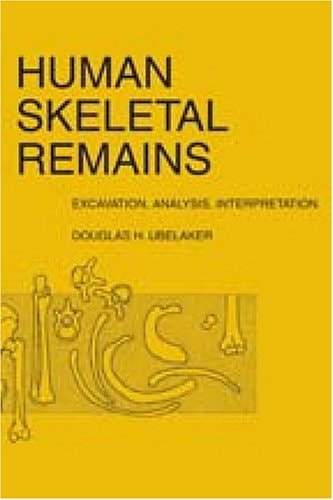
Human Skeletal Remains: Excavation, Analysis, Interpretation
0
0
As an Amazon Associate and affiliate partner, Menrva Books earns from qualifying purchases. Learn more
Author Description
Many anthropologists and even some archeologists have asked, "Why excavate skeletons? What information can we gain to merit the disturbance of human interments?" Human Skeletal Remains answers such questions. Douglas H. Ubelaker demonstrates the range of data and interpretations potentially obtainable from human skeletal remains and shows how this information can contribute to the solution of various anthropological problems. It also describes and evaluates basic techniques of skeletal excavation and analysis.Human Skeletal Remains is divided into two sections. The first section reviews the techniques and information needed for excavating and describing skeletal remains and for achieving reliable estimates of stature, sex, and age at death. These chapters should improve the capacity of non-specialists to undertake skeletal excavation and preliminary analysis. The second section discusses additional kinds of information that can be gleaned from suitable samples by experienced skeletal biologists.The information in Human Skeletal Remains is a broad-scale overview and many aspects have been treated in greater detail by others elsewhere. References are provided in the text for the convenience of those interested in more information on specific topics. Technical terminology has been avoided where possible, but accurate recording and description cannot be accomplished without employing the names of individual bones and other skeletal landmarks. Terms most commonly needed for description are included in a glossary. While it is somewhat modest in its intentions, this analysis provides a clarity that extensive tomes cannot supply.
Menrva's Summary
THE THESIS
This work investigates the scientific value of human skeletal remains and the methodologies required to extract meaningful data from archaeological interments. Douglas H. Ubelaker, a prominent figure in forensic anthropology, provides a structured framework for both the excavation and the subsequent analysis of human remains. By bridging the gap between field recovery and laboratory interpretation, the author argues that skeletal remains serve as a primary source for understanding past populations and solving complex anthropological problems. The text balances technical rigor with accessibility, aiming to standardize practices for both non-specialists and experienced researchers.
THE SCOPE MAP
What You Will Find
- Standardized techniques for the excavation and documentation of human burials.
- Methodologies for estimating biological profiles, including age, sex, and stature.
- Analysis of skeletal pathology and markers of activity or stress.
- A comprehensive glossary of anatomical landmarks and skeletal terminology.
THE AUTHORITY PERSPECTIVE
Experts recognize this text as a foundational resource for those entering the field of bioarchaeology and forensic anthropology. Readers frequently note that the book provides a clear, concise overview of complex procedures without the overwhelming density found in more specialized academic tomes.
Page Count:
146
Publication Date:
2008-04-30
Publisher:
Aldine Transaction
ISBN-10:
0202362396
ISBN-13:
9780202362397
Science
Anthropometry
Anthropology
Forensic Science
Paleopathology
Archaeology