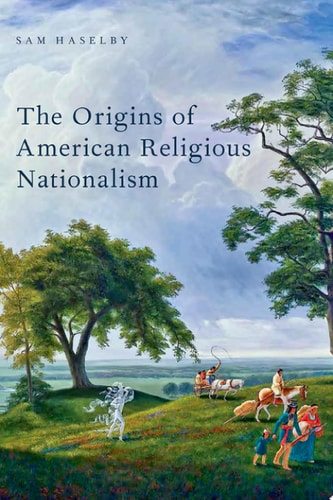
The Origins of American Religious Nationalism
0
0
As an Amazon Associate and affiliate partner, Menrva Books earns from qualifying purchases. Learn more
Author Description
Sam Haselby offers a new and persuasive account of the role of religion in the formation of American nationality, showing how a contest within Protestantism reshaped American political culture and led to the creation of an enduring religious nationalism. Following U.S. independence, the new republic faced vital challenges, including a vast and unique continental colonization project undertaken without, in the centuries-old European senses of the terms, either "a church" or "a state." Amid this crisis, two distinct Protestant movements arose: a popular and rambunctious frontier revivalism; and a nationalist, corporate missionary movement dominated by Northeastern elites. The former heralded the birth of popular American Protestantism, while the latter marked the advent of systematic Protestant missionary activity in the West. The explosive economic and territorial growth in the early American republic, and the complexity of its political life, gave both movements opportunities for innovation and influence. This book explores the competition between them in relation to major contemporary developments-political democratization, large-scale immigration and unruly migration, fears of political disintegration, the rise of American capitalism and American slavery, and the need to nationalize the frontier. Haselby traces these developments from before the American Revolution to the rise of Andrew Jackson. His approach illuminates important changes in American history, including the decline of religious distinctions and the rise of racial ones, how and why "Indian removal" happened when it did, and with Andrew Jackson, the appearance of the first full-blown expression of American religious nationalism.
Menrva's Summary
THE THESIS
This book investigates how a competition between two distinct Protestant movements during the early American republic shaped the formation of American national identity and political culture. Sam Haselby, a historian of American religion and politics, utilizes primary source documentation and historical analysis to argue that the tension between frontier revivalism and Northeastern missionary efforts facilitated the rise of a cohesive religious nationalism. He examines how these religious forces interacted with the expansion of capitalism, the institution of slavery, and the political democratization of the Jacksonian era to define the boundaries of American citizenship.
THE SCOPE MAP
What You Will Find
- Analysis of the conflict between frontier revivalism and elite-led missionary organizations.
- Examination of the intersection between religious development and territorial expansion.
- Discussion of the role of religion in the justification of Indian removal and the rise of racial distinctions.
Scope Limits
- The analysis concludes with the rise of Andrew Jackson and does not extend into the later 19th-century religious movements.
- The text focuses primarily on Protestant denominations and does not provide an exhaustive survey of non-Protestant religious traditions in the early republic.
THE AUTHORITY PERSPECTIVE
Historians and scholars of American religion identify this work as a significant contribution to understanding the structural influence of Protestantism on early national identity. Readers frequently note the academic density of the prose, which provides a rigorous framework for interpreting the complex relationship between religious competition and political power.
Page Count:
352
Publication Date:
2016-01-01
Publisher:
Oxford University Press
ISBN-10:
0190266503
ISBN-13:
9780190266509
Religion
History
United States
National characteristics American
Protestantism
Sociology of Religion
Nationalism
American History
Community Tags
Other Editions(3)
Similar Books








Reader Comments
Share Your Thoughts
No comments yet. Be the first to share your thoughts!