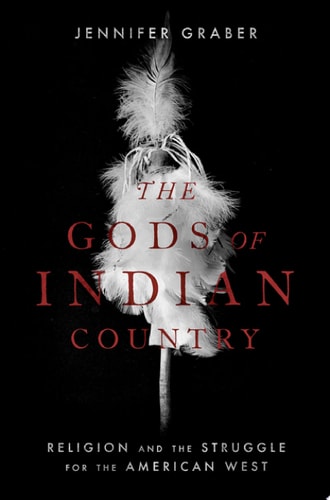
The Gods of Indian Country
0
0
As an Amazon Associate and affiliate partner, Menrva Books earns from qualifying purchases. Learn more
Author Description
During The Nineteenth Century, White Americans Sought The Cultural Transformation And Physical Displacement Of Native People. Though This Process Was Certainly A Clash Of Rival Economic Systems And Racial Ideologies, It Was Also A Profound Spiritual Struggle. The Fight Over Indian Country Sparked Religious Crises Among Both Natives And Americans. In The Gods Of Indian Country, Jennifer Graber Tells The Story Of The Kiowa Indians During Anglo-americans' Hundred-year Effort To Seize Their Homeland. Like Native People Across The American West, Kiowas Had Known Struggle And Dislocation Before. But The Forces Bearing Down On Them-soldiers, Missionaries, And Government Officials-were Unrelenting. With Pressure Mounting, Kiowas Adapted Their Ritual Practices In The Hope That They Could Use Sacred Power To Save Their Lands And Community. Against The Kiowas Stood Protestant And Catholic Leaders, Missionaries, And Reformers Who Hoped To Remake Indian Country. These Activists Saw Themselves As The Indians' Friends, Teachers, And Protectors. They Also Asserted The Primacy Of White Christian Civilization And The Need To Transform The Spiritual And Material Lives Of Native People. When Kiowas And Other Native People Resisted Their Designs, These Christians Supported Policies That Broke Treaties And Appropriated Indian Lands. They Argued That The Gifts Bestowed By Christianity And Civilization Outweighed The Pains That Accompanied The Denial Of Freedoms, The Destruction Of Communities, And The Theft Of Resources. In Order To Secure Indian Country And Control Indigenous Populations, Christian Activists Sanctified The Economic And Racial Hierarchies Of Their Day. The Gods Of Indian Country Tells A Complex, Fascinating-and Ultimately Heartbreaking-tale Of The Struggle For The American West.
Menrva's Summary
THE THESIS
How did religious ideologies and spiritual practices shape the nineteenth-century conflict between the Kiowa people and American expansionists? Jennifer Graber, a scholar of American religion, utilizes archival records, missionary accounts, and Kiowa oral histories to argue that the colonization of the American West was as much a spiritual battle as it was a political or economic one. She demonstrates how Christian reformers justified the dispossession of Native lands through a framework of moral superiority, while the Kiowa adapted their own sacred rituals to navigate and resist these existential pressures.
THE SCOPE MAP
What You Will Find
- Analysis of nineteenth-century Kiowa ritual adaptation in response to colonial pressure.
- Examination of the role of Protestant and Catholic missionaries in federal Indian policy.
- Historical documentation of the intersection between American expansionism and Christian proselytization.
Scope Limits
- The study focuses primarily on the Kiowa experience and does not provide a comprehensive survey of every Native nation in the American West.
- The text does not offer a broad history of American Christianity outside of its specific application to federal Indian policy and assimilation efforts.
THE AUTHORITY PERSPECTIVE
Scholars and historians frequently cite this work for its nuanced examination of how religious rhetoric was weaponized to justify land appropriation. Readers often note the academic density of the prose, which provides a rigorous analysis of the spiritual dimensions of the American frontier.
Page Count:
304
Publication Date:
2018-01-01
Publisher:
Oxford University Press
ISBN-10:
0190279621
ISBN-13:
9780190279622
Religion
History
Native American
Sociology
American West
Community Tags
Similar Books