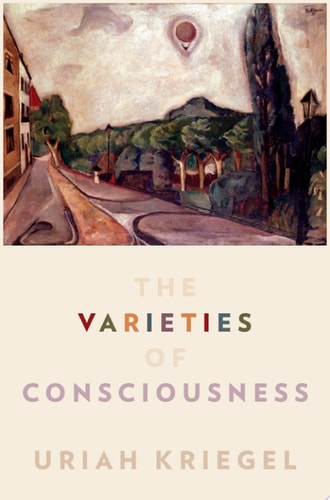
The Varieties of Consciousness
0
0
As an Amazon Associate and affiliate partner, Menrva Books earns from qualifying purchases. Learn more
Author Description
Recent work on consciousness has featured a number of debates on the existence and character of controversial types of phenomenal experience. Perhaps the best-known is the debate over the existence of a sui generis, irreducible cognitive phenomenology, a phenomenology proper to thought. Another concerns the existence of a sui generis phenomenology of agency. Such debates bring up a more general question: how many types of sui generis, irreducible, basic, primitive phenomenology do we have to posit to just be able to describe the stream of consciousness? This book offers a first general attempt to answer this question in contemporary philosophy. It develops a unified framework for systematically addressing this question and applies it to six controversial types of phenomenal experience, namely, those associated with thought and judgment, will and agency, pure apprehension, emotion, moral thought and experience, and the experience of freedom.
Menrva's Summary
THE THESIS
How many types of sui generis, irreducible, basic, primitive phenomenology are required to accurately describe the stream of consciousness? Uriah Kriegel, a prominent philosopher of mind, addresses this question by developing a unified framework for evaluating controversial phenomenal experiences. He applies this systematic approach to six distinct categories of experience to determine their status as primitive or irreducible phenomena.
THE SCOPE MAP
What You Will Find
- A unified theoretical framework for classifying phenomenal experience
- Analysis of cognitive phenomenology related to thought and judgment
- Examination of agency, will, and the experience of freedom
- Investigation into pure apprehension and emotional states
- Discussion of moral thought and experience
Scope Limits
- The text does not provide a comprehensive neurobiological account of consciousness
- It focuses primarily on contemporary analytic philosophical debates rather than historical phenomenological traditions
THE AUTHORITY PERSPECTIVE
Experts recognize this work as a significant contribution to the ongoing debate regarding the taxonomy of phenomenal experience. Readers frequently note the academic density of the prose, which is intended for scholars and advanced students of philosophy of mind.
Page Count:
296
Publication Date:
2015-01-01
Publisher:
Oxford University Press
ISBN-10:
0190273240
ISBN-13:
9780190273248
Philosophy
Consciousness
Phenomenology
Philosophy of
Community Tags
Similar Books