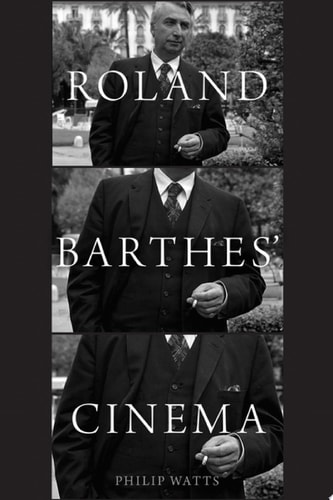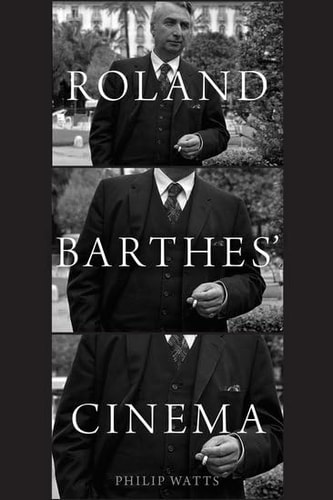
Roland Barthes' Cinema
0
0
As an Amazon Associate and affiliate partner, Menrva Books earns from qualifying purchases. Learn more
Author Description
The most famous name in French literary circles from the late 1950s till his death in 1981, Roland Barthes maintained a contradictory rapport with the cinema. As a cultural critic, he warned of its surreptitious ability to lead the enthralled spectator toward an acceptance of a pre-given world. As a leftist, he understood that spectacle could be turned against itself and provoke deep questioning of that pre-given world. And as an extraordinarily sensitive human being, he relished the beauty of images and the community they could bring together.
Menrva's Summary
THE THESIS
This work investigates the complex and often paradoxical relationship between Roland Barthes and the medium of cinema. Philip Watts, a scholar of French literature and culture, examines how Barthes navigated the tension between cinema as a tool for ideological indoctrination and its potential as a site for critical subversion. The book synthesizes Barthes' essays, lectures, and personal reflections to map his evolving stance on the image, the spectator, and the political function of spectacle.
THE SCOPE MAP
What You Will Find
- Analysis of Barthes' writings on film from the 1950s through 1981
- Examination of the intersection between semiotics and cinematic spectatorship
- Discussion of Barthes' personal aesthetic appreciation for film imagery
Scope Limits
- Does not provide a comprehensive biography of Barthes' life outside of his cinematic interests
- Does not attempt to construct a formal 'Barthesian' theory of film production
THE AUTHORITY PERSPECTIVE
Scholars and film theorists frequently cite this text as a necessary resource for understanding the intersection of structuralist thought and visual culture. Experts highlight the book's ability to clarify the nuanced, often contradictory positions Barthes held regarding the power of the screen.
Page Count:
216
Publication Date:
2016-03-30
Publisher:
Oxford University Press
ISBN-10:
0190277548
ISBN-13:
9780190277543
Philosophy
Biography
Literary Criticism
Motion pictures
Film Theory