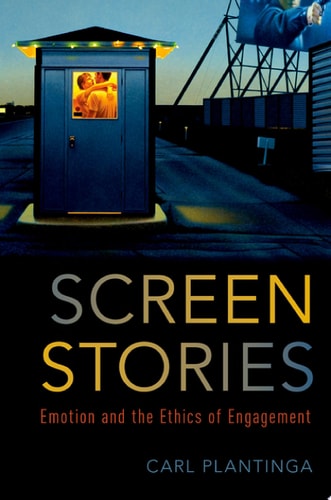
Screen Stories: Emotion and the Ethics of Engagement
0
0
As an Amazon Associate and affiliate partner, Menrva Books earns from qualifying purchases. Learn more
Author Description
The way we communicate with each other is vital to preserving the cultural ecology, or wellbeing, of a place and time. Do we listen to each other? Do we ask the right questions? Do we speak about each other with respect or disdain? The stories that we convey on screens, or what author Carl Plantinga calls 'screen stories,' are one powerful and pervasive means by which we communicate with each other. Screen Stories: Emotion and the Ethics of Engagement argues that film and media studies needs to move toward an an approach to ethics that is more appropriate for mass consumer culture and the lives of its citizens.Primarily concerned with the relationship between media and viewers, this book considers ethical criticism and the emotional power of screen stories that makes such criticism necessary. The content we consume--from television shows and movies to advertisements--can significantly affect our welfare on a personal and societal level, and thus, this content is subject to praise and celebration, or questioning and even condemnation. The types of screen stories that circulate contribute to the cultural ecology of a time and place; through shared attention they influence what individuals think and feel. Plantinga develops a theory of the power of screen stories to affect both individuals and cultures, asserting that we can better respond ethically to such media if we understand the sources of its influence on us.
Menrva's Summary
THE THESIS
How do screen stories influence the cultural ecology and ethical landscape of contemporary society? Carl R. Plantinga, a scholar in film and media studies, investigates the intersection of emotional engagement and moral responsibility in mass media. He argues that because screen stories—ranging from cinema to advertising—shape individual and collective welfare, viewers must develop a more robust framework for ethical criticism to navigate the influence of these narratives.
THE SCOPE MAP
What You Will Find
- A theoretical framework for understanding the emotional power of media.
- Analysis of the relationship between viewer psychology and narrative content.
- Ethical evaluation of mass consumer culture and its societal impact.
Scope Limits
- The book does not provide a comprehensive history of film technology or industry production practices.
- It does not offer a prescriptive guide for content creators on how to write specific scripts.
THE AUTHORITY PERSPECTIVE
Scholars in the field of media studies recognize this work as a significant contribution to the ethics of spectatorship and emotional engagement. Readers frequently note the academic density of the prose, which is intended for students and researchers interested in the intersection of philosophy and media consumption.
Page Count:
328
Publication Date:
2018-05-31
Publisher:
Oxford University Press
ISBN-10:
0190867140
ISBN-13:
9780190867140
Philosophy
Film Theory
Media Studies
Motion pictures
Mass media
Ethics
Communication