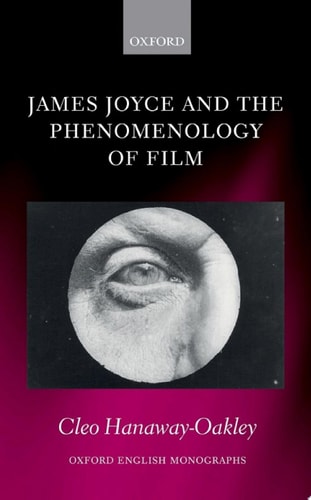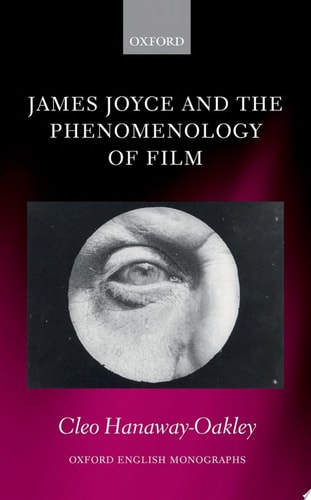
James Joyce and the Phenomenology of Film
0
0
As an Amazon Associate and affiliate partner, Menrva Books earns from qualifying purchases. Learn more
Author Description
James Joyce And The Phenomenology Of Film Reappraises The Lines Of Influence Said To Exist Between Joyce's Writing And Early Cinema And Provides An Alternative To Previous Psychoanalytic Readings Of Joyce And Film. Through A Compelling Combination Of Historical Research And Critical Analysis, Cleo Hanaway-oakley Demonstrates That Joyce, Early Film-makers, And Phenomenologists (maurice Merleau-ponty, In Particular) Share A Common Enterprise: All Are Concerned With Showing, Rather Than Explaining, The 'inherence Of The Self In The World'. Instead Of Portraying An Objective, Neutral World, Bereft Of Human Input, Joyce, The Film-makers, And The Phenomenologists Present Embodied, Conscious Engagement With The Environment And Others: They Are Interested In The World-as-it-is-lived And Transcend The Seemingly-rigid Binaries Of Seer/seen, Subject/object, Absorptive/theatrical, And Personal/impersonal. This Book Re-evaluates The History Of Body- And Spectator-focused Film Theories, Placing Merleau-ponty At The Centre Of The Discussion, And Considers The Ways In Which Joyce May Have Encountered Such Theories. In A Wealth Of Close Analyses, Joyce's Fiction Is Read Alongside The Work Of Early Film-makers Such As Charlie Chaplin, Georges Méliès, And Mitchell And Kenyon, And In Relation To The Philosophical Dimensions Of Early-cinematic Devices Such As The Mutoscope, The Stereoscope, And The Panorama. By Putting Joyce's Literary Work—ulysses Above All—into Dialogue With Both Early Cinema And Phenomenology, This Book Elucidates And Enlivens Literature, Film, And Philosophy.
Menrva's Summary
THE THESIS
This book investigates the intersection of James Joyce’s literary techniques, early cinema, and phenomenological philosophy to determine how they collectively represent the embodied experience of the world. Cleo Hanaway-Oakley, a scholar in modernist literature and film, utilizes a framework centered on Maurice Merleau-Ponty’s phenomenology to challenge traditional psychoanalytic interpretations of Joyce. By examining the shared objective of showing rather than explaining human existence, the author argues that Joyce and early filmmakers prioritize the 'inherence of the self in the world' over objective, detached observation.
THE SCOPE MAP
What You Will Find
- Comparative analysis of James Joyce’s fiction, specifically Ulysses, alongside early film works.
- Application of Merleau-Ponty’s phenomenological theories to literary and cinematic texts.
- Historical examination of early cinematic devices including the Mutoscope, stereoscope, and panorama.
- Critical re-evaluation of body-focused and spectator-focused film theories.
Scope Limits
- The text does not provide a comprehensive biography of James Joyce or a general history of cinema.
- It does not engage deeply with post-structuralist or purely psychoanalytic film theory beyond contrasting them with the phenomenological approach.
THE AUTHORITY PERSPECTIVE
Scholars and critics recognize this work as a significant contribution to modernist studies and interdisciplinary film theory. Readers frequently note the academic density of the prose, which is intended for those familiar with both Joycean literature and continental philosophy.
Page Count:
208
Publication Date:
2017-01-01
Publisher:
Oxford University Press
ISBN-10:
0191081558
ISBN-13:
9780191081552
Philosophy
Modernism
Literary Criticism
Film Theory
James Joyce
Phenomenology