Cold War
0
0
As an Amazon Associate and affiliate partner, Menrva Books earns from qualifying purchases. Learn more
Author Description
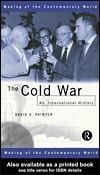
David Painter provides a compact and analytical study of the origins, course and end of the Cold War. Taking a global overview and emphasising the Third World as well as the contested regions of Asia and Central America, he includes discussion of:* the global distribution of power* the arms race* the world economy* the human and financial costs of the Cold War* key incidents, wars, 'actors' and especially 'the end'.The book will prove an invaluable introduction to the international state of affairs between 1945 and 1990.
Menrva's Summary
THE THESIS
This work investigates the geopolitical origins, progression, and eventual conclusion of the Cold War through a global analytical lens. David S. Painter, a historian specializing in international relations, utilizes a synthesis of diplomatic records and economic data to frame the conflict not merely as a bipolar struggle between the United States and the Soviet Union, but as a complex global phenomenon. The text argues that the Cold War fundamentally reshaped the international distribution of power and the global economy, necessitating a focus on peripheral regions such as Asia and Central America to fully understand its impact.
THE SCOPE MAP
What You Will Find
- Analysis of the global distribution of power from 1945 to 1990
- Examination of the arms race and its financial and human costs
- Integration of Third World perspectives and regional conflicts in Asia and Central America
- Assessment of the world economy and its role in the conflict's end
THE AUTHORITY PERSPECTIVE
Experts frequently cite this text as a concise and effective introduction for students seeking a broad overview of Cold War dynamics. Readers note the clarity of the prose and the author's ability to synthesize complex international events into a manageable analytical framework.
Page Count:
144
Publication Date:
1999-04-01
Publisher:
Routledge
ISBN-10:
0203053028
ISBN-13:
9780203053027
History
International relations
Cold War
Nonfiction
Guerre froide
Koude Oorlog
Guerra Fria