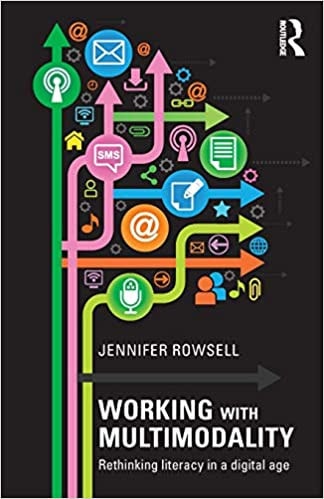
Working with Multimodality: Rethinking Literacy in a Digital Age
0
0
As an Amazon Associate and affiliate partner, Menrva Books earns from qualifying purchases. Learn more
Author Description
In today's digital world, we have multiple modes of meaning-making: sounds, images, hypertexts. Yet, within literacy education, even 'new' literacies, we know relatively little about how to work with and produce modally complex texts. In Working with Multimodality, Jennifer Rowsell focuses on eight modes: words, images, sounds, movement, animation, hypertext, design and modal learning. Throughout the book each mode is illustrated by cases studies based on the author's interviews with thirty people, who have extensive experience working with a mode in their field. From a song writer to a well known ballet dancer, these people all discuss what it means to do multimodality well. This accessible textbook brings the multiple modes together into an integrated theory of multimodality. Step-by-step, beginning with theory then exploring modes and how to work with them, before concluding with how to apply this in an investigation, each stage of working with multimodality is covered. Working with Multimodality will help students and scholars to: Think about specific modes and how they function. Consider the implications for multimodal meaning-making. Become familiar with conventions and folk knowledge about given modes. Apply this same knowledge to their own production of media texts in classrooms. Assuming no prior knowledge about multimodality and its properties, Working with Multimodality is designed to appeal to advanced undergraduate and postgraduate students interested in how learning and innovation is different in a digital and media age and is an essential textbook for courses in literacy, new media and multimodality within applied linguistics, education and communication studies.
Menrva's Summary
THE THESIS
This book investigates how literacy education can adapt to a digital landscape by integrating multiple modes of meaning-making beyond traditional text. Jennifer Rowsell, an expert in literacy and new media, synthesizes theoretical frameworks with empirical data to address the gap in how educators teach modally complex texts. By analyzing eight distinct modes, the author provides a structured approach for students and scholars to understand and produce media in a contemporary context.
THE SCOPE MAP
What You Will Find
- Analysis of eight specific modes: words, images, sounds, movement, animation, hypertext, design, and modal learning.
- Case studies derived from interviews with thirty professionals, including songwriters and dancers, regarding their creative processes.
- A step-by-step methodological framework for applying multimodal theory to classroom investigations and media production.
- Theoretical foundations for understanding how meaning-making functions in a digital and media-saturated age.
THE AUTHORITY PERSPECTIVE
Experts and educators recognize this text as a foundational resource for those beginning their study of multimodal literacy. Readers frequently note the clarity of the prose and the practical utility of the case studies for both undergraduate and postgraduate coursework.
Page Count:
173
Publication Date:
2013-01-01
Publisher:
Routledge
ISBN-10:
0203071956
ISBN-13:
9780203071953
Linguistics
Communication Studies
Education
Mass media
Media Studies
Modality linguistics