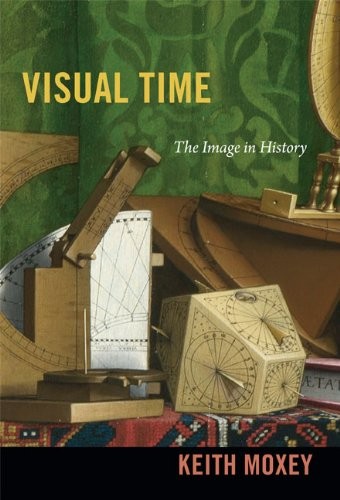
Visual Time: The Image in History
0
0
As an Amazon Associate and affiliate partner, Menrva Books earns from qualifying purchases. Learn more
Author Description
Visual Time offers a rare consideration of the idea of time in art history. Non-Western art histories currently have an unprecedented prominence in the discipline. To what extent are their artistic narratives commensurate with those told about Western art? Does time run at the same speed in all places? Keith Moxey argues that the discipline of art history has been too attached to interpreting works of art based on a teleological categorization—demonstrating how each work influences the next as part of a linear sequence—which he sees as tied to Western notions of modernity. In contrast, he emphasizes how the experience of viewing art creates its own aesthetic time, where the viewer is entranced by the work itself rather than what it represents about the historical moment when it was created. Moxey discusses the art, and writing about the art, of modern and contemporary artists, such as Gerard Sekoto, Thomas Demand, Hiroshi Sugimoto, and Cindy Sherman, as well as the sixteenth-century figures Pieter Bruegel the Elder, Albrecht Dürer, Matthias Grünewald, and Hans Holbein. In the process, he addresses the phenomenological turn in the study of the image, its application to the understanding of particular artists, the ways verisimilitude eludes time in both the past and the present, and the role of time in nationalist accounts of the past.
Menrva's Summary
THE THESIS
This book challenges the traditional, linear interpretation of art history by proposing that the experience of viewing art creates its own aesthetic time, independent of historical context. Keith Moxey, a noted art historian, argues that the discipline's reliance on teleological categorization, tracing influence from one work to the next as part of a Western notion of modernity, overlooks the viewer's immediate engagement with the artwork. He posits that this engagement generates a unique temporal experience, focusing on the aesthetic qualities of the piece rather than its historical moment of creation. The book examines art and art criticism from both modern and contemporary periods, alongside works from the sixteenth century, to illustrate these concepts.
THE SCOPE MAP
- An examination of the concept of time within art history, challenging Western teleological interpretations.
- An exploration of how the viewer's experience of art creates its own aesthetic time.
- Discussion of modern and contemporary artists including Gerard Sekoto, Thomas Demand, Hiroshi Sugimoto, and Cindy Sherman.
- Analysis of sixteenth-century artists such as Pieter Bruegel the Elder, Albrecht Dürer, Matthias Grünewald, and Hans Holbein.
- Consideration of the phenomenological turn in the study of images and its application to art.
- An investigation into how verisimilitude eludes time in both past and present.
- The role of time in nationalist accounts of the past.
THE AUTHORITY PERSPECTIVE
This work is recognized for its significant contribution to art history by questioning established methodologies. It offers a compelling argument for understanding art through the lens of aesthetic time, a concept that diverges from traditional linear and teleological approaches. The book is noted for its broad scope, engaging with a diverse range of artists from different historical periods and cultural contexts to support its thesis. It is likely to be of interest to scholars and students of art history, visual culture, and critical theory.
Page Count:
224
Publication Date:
2013-01-01
ISBN-10:
0822353547
ISBN-13:
9780822353546
Art
Non-Fiction
History
Art History
Modern Art
Contemporary Art
Visual Culture















