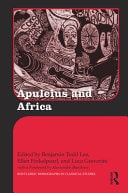
Apuleius and Africa
Author Description
The Metamorphoses or Golden Ass of Apuleius (ca. 170 CE) is a Latin novel written by a native of Madauros in Roman North Africa, a region roughly equal to modern Tunisia together with parts of Libya and Algeria. Apuleius' novel is based on the model of a lost Greek novel; it narrates the adventures of a Greek character with a Roman name who spends the bulk of the novel transformed into an animal, traveling from Greece to Rome only to end his adventures in the capital city of the empire as a priest of the Eqyptian goddess Isis. Apuleius' Florida and Apology deal more explicitly with the African provenance and character of their author while also demonstrating his complex interaction with Greek, Roman, and local cultures. Apuleius' philosophical works raise other questions about Greek vs. African and Roman cultural identity. Apuleius and Africa addresses the problem of this intricate complex of different identities and its connection to Apuleius' literary production. It especially emphasizes Apuleius' African heritage, a heritage that has for the most part been either downplayed or even deplored by previous scholarship. The contributos include philologists, historians, and experts in material culture; among them are some of the most respected scholars in their fields. The chapters give due attention to all elements of Apuleius' oeuvre, and break new ground both on the interpretation of Apuleius' literary production and on the culture of the Roman Empire in the second century. The volume also includes a mdoern, sub-Saharan contribution in which "Africa" mainly means Mediterranean Africa. -- from back cover.
Menrva's Summary
THE THESIS
This volume investigates the intersection of Apuleius' North African identity and his literary output within the broader context of the Roman Empire. The editors, Benjamin Todd Lee, Ellen Finkelpearl, and Luca Graverini, curate a collection of essays from philologists, historians, and material culture experts to challenge historical scholarship that has minimized the author's African heritage. By examining his novels, philosophical treatises, and rhetorical works, the contributors argue that Apuleius' complex cultural identity is central to understanding his creative production and his place in the second-century Mediterranean world.
THE SCOPE MAP
What You Will Find
- Analysis of the cultural and geographical landscape of Roman North Africa including modern Tunisia, Libya, and Algeria.
- Examination of the interplay between Greek, Roman, and local African cultural identities in Apuleius' works.
- Scholarly investigation into the Metamorphoses, Florida, and Apology.
- Multidisciplinary perspectives incorporating philology, history, and material culture studies.
THE AUTHORITY PERSPECTIVE
Experts recognize this collection as a significant intervention in Apuleian studies, specifically for its focus on the author's regional provenance. Readers frequently note the academic density of the prose, which is intended for scholars and students of classical antiquity.
Page Count:
344
Publication Date:
2014-01-01
Publisher:
Taylor & Francis Group
ISBN-10:
0203105508
ISBN-13:
9780203105504
History
Philosophy
Literary Criticism
Criticism history
Apuleius
Community Tags
Similar Books