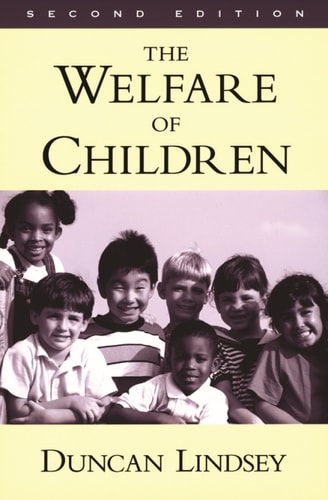
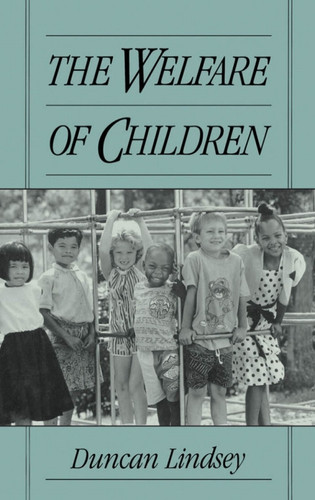
The Welfare of Children
0
0
As an Amazon Associate and affiliate partner, Menrva Books earns from qualifying purchases. Learn more
Author Description
According to the United Nations' latest data, the United States has more children living in poverty than any other industrialized nation in the world. More than a fifth of all children grow up in poverty. The poverty rates for African-American and Latino children often exceeds 40 percent. Furthermore, the United States--a country that once pioneered strategies to prevent child abuse and that now spends more money fighting child abuse than any other industrialized country--also has the highest rate of child abuse in the industrialized world. Against this background, Duncan Lindsey, a leading authority on child welfare, takes a critical look at the current welfare system. He traces the transformation of child welfare into child protective services, arguing that the current focus on abuse has produced a system that is designed to protect children from physical and sexual abuse and therefore functions as a last resort for only the worst and most dramatic cases in child welfare. In a close analysis of the process of investigating child abuse, Linsey finds that there is no evidence that the transformation into protective services has reduced child abuse fatalities or provided a safter environment for children. He makes a compelling argument for the criminal justice system to assume responsibility for the problem of child abuse in order for the child welfare system to be able to adequately address the well-being of a much larger number of children now growing up in poverty. This new edition of The Welfare of Children takes into account a major legislative change since the publication of the first edition: the welfare reform legislation of 1996. This legislation has fundamentally altered the public child welfare system as broadly understood, and Lindsey thoroughly examines its implications on policy and practice, refuting the claim that welfare reform has actually reduced child poverty. The Welfare of Children, 2nd Edition is a compassionate blueprint for the comprehensive
Menrva's Summary
THE THESIS
This work investigates the systemic failure of the United States child welfare system to address child poverty and abuse, questioning whether the current focus on protective services is effective. Duncan Lindsey, a recognized authority in child welfare, utilizes historical analysis and policy review to argue that the shift toward a protective services model has marginalized the broader needs of impoverished children. He proposes that the criminal justice system should handle abuse cases, allowing the welfare system to focus on the comprehensive well-being of children living in poverty.
THE SCOPE MAP
What You Will Find
- Historical transformation of child welfare into child protective services
- Analysis of the 1996 welfare reform legislation and its policy implications
- Examination of child poverty statistics and abuse investigation processes
Scope Limits
- The text does not provide a detailed manual for individual social work practice
- It does not offer a comprehensive history of international child welfare systems outside of the United States context
THE AUTHORITY PERSPECTIVE
Experts and academics frequently cite this text as a critical examination of the structural limitations inherent in American child protective services. Readers often note the dense, policy-oriented nature of the prose, which serves as a foundational critique for students and professionals in social work and public policy.
Page Count:
465
Publication Date:
2003-01-01
Publisher:
Oxford University Press
ISBN-10:
0190285850
ISBN-13:
9780190285852
Child Abuse
Family & Consumer Sciences
Introduction to Social WorkWelfare
Child Advocacy
Sociology
Social Science
Child Welfare
Public Policy
Psychotherapy
Community Tags
Other Editions(6)

Similar Books





Reader Comments
Share Your Thoughts
No comments yet. Be the first to share your thoughts!