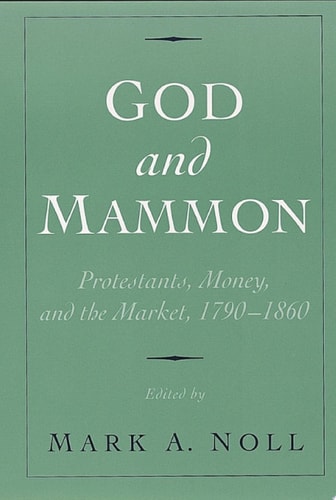
God and Mammon: Protestants, Money, and the Market, 1790-1860
0
0
As an Amazon Associate and affiliate partner, Menrva Books earns from qualifying purchases. Learn more
Author Description
This collection of all new essays by leading historians offers a close look at the connections between American Protestants and money in the Antebellum period. During the first decades of the new American nation, money was everywhere on the minds of church leaders and many of their followers. Economic questions figured regularly in preaching and pamphleteering, and they contributed greatly to perceptions of morality both public and private. In fact, money was always a religious question. For this reason, argue the authors of these essays, it is impossible to understand broader cultural developments of the period--including political developments--without considering religion and economics together. In God and Mammon, several essays examine the ways in which the churches raised money after the end of establishment put a stop to state funding, such as the collection of pew rents, lotteries, and free-will offerings, which only came later and at first were used only for benevolent purposes. Other essays look at the role of money and markets in the rise of Christian voluntary societies. Still others examine the inter-denominational strife, documenting frequent accusations that theological error led to the misuse of money and the arrogance of wealth. Taken together, the essays provide essential background to an issue that continues to loom large and generate controversy in the Protestant community in America.
Menrva's Summary
THE THESIS
This collection investigates the complex intersection of American Protestant religious life and economic practices during the formative Antebellum period. Edited by historian Mark A. Noll, the volume compiles essays from leading scholars to argue that financial concerns were inseparable from the moral and theological discourse of the era. By examining how churches adapted to the loss of state funding and the rise of market capitalism, the contributors demonstrate that economic activity was fundamentally a religious concern for nineteenth-century Americans.
THE SCOPE MAP
What You Will Find
- Analysis of church fundraising methods including pew rents and lotteries
- Examination of the rise of Christian voluntary societies in a market economy
- Documentation of inter-denominational conflicts regarding wealth and theological error
- Historical context for the relationship between public morality and private finance
Scope Limits
- Does not provide a comprehensive history of American economic policy outside of religious contexts
- Focuses primarily on the Protestant experience rather than a comparative study of all American religious traditions
THE AUTHORITY PERSPECTIVE
Experts recognize this collection as a significant contribution to the study of American religious history and the development of the market economy. Readers frequently note the academic density of the prose, which provides a rigorous look at the institutional challenges faced by churches during the early nineteenth century.
Page Count:
315
Publication Date:
2001-01-01
Publisher:
Oxford University Press
ISBN-10:
0190287357
ISBN-13:
9780190287351
History
Religion
Economics
Protestantism
American History
Money & BankingMonetary Theory
English
Linguistics
English & College Success
Community Tags
Similar Books