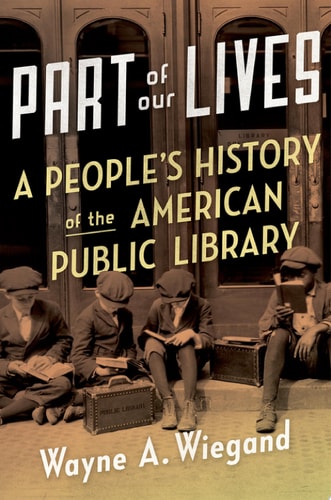
Part of Our Lives: A People's History of the American Public Library
0
0
As an Amazon Associate and affiliate partner, Menrva Books earns from qualifying purchases. Learn more
Author Description
Despite Dire Predictions In The Late Twentieth Century That Public Libraries Would Not Survive The Turn Of The Millennium, Their Numbers Have Only Increased. Two Of Three Americans Frequent A Public Library At Least Once A Year, And Nearly That Many Are Registered Borrowers. Although Library Authorities Have Argued That The Public Library Functions Primarily As A Civic Institution Necessary For Maintaining Democracy, Generations Of Library Patrons Tell A Different Story. In Part Of Our Lives, Wayne A. Wiegand Delves Into The Heart Of Why Americans Love Their Libraries. The Book Traces The History Of The Public Library, Featuring Records And Testimonies From As Early As 1850. Rather Than Analyzing The Words Of Library Founders And Managers, Wiegand Listens To The Voices Of Everyday Patrons Who Cherished Libraries. Drawing On Newspaper Articles, Memoirs, And Biographies, Part Of Our Lives Paints A Clear And Engaging Picture Of Americans Who Value Libraries Not Only As Civic Institutions, But Also As Public Places That Promote And Maintain Community. Whether As A Public Space, A Place For Accessing Information, Or A Home For Reading Material That Helps Patrons Make Sense Of The World Around Them, The Public Library Has A Rich History Of Meaning For Millions Of Americans. From Colonial Times Through The Recent Technological Revolution, Libraries Have Continuously Adapted To Better Serve The Needs Of Their Communities. Wiegand Demonstrates That, Although Cultural Authorities (including Some Librarians) Have Often Disparaged Reading Books Considered Not Serious, The Commonplace Reading Materials Users Obtained From Public Libraries Have Had A Transformative Effect For Many, Including People Such As Ronald Reagan, Bill Moyers, Edgwina Danticat, Philip Roth, Toni Morrison, Sonia Sotomayor, And Oprah Winfrey. A Bold Challenge To Conventional Thinking About The American Public Library, Part Of Our Lives Is An Insightful Look Into One Of America's Most Beloved Cultural Institu
Menrva's Summary
THE THESIS
This work investigates why public libraries have remained vital cultural institutions in America despite predictions of their obsolescence. Wayne A. Wiegand, a prominent library historian, shifts the focus from the administrative goals of library founders to the lived experiences of the patrons themselves. By analyzing a wide array of personal testimonies and historical records, he argues that the library's enduring success stems from its role as a community space that provides personal meaning and access to information for everyday citizens.
THE SCOPE MAP
What You Will Find
- Historical analysis of library usage from 1850 to the present.
- Qualitative data derived from memoirs, biographies, and contemporary newspaper accounts.
- Case studies of notable individuals whose intellectual development was influenced by public library access.
Scope Limits
- The text does not focus on the administrative or architectural history of library buildings.
- It does not provide a technical manual for modern library management or digital infrastructure.
THE AUTHORITY PERSPECTIVE
Experts in library and information science recognize this work as a significant departure from traditional institutional histories by centering the user experience. Readers frequently note the accessible prose style, which balances academic rigor with a narrative focus on the personal impact of public reading spaces.
Page Count:
480
Publication Date:
2015-01-01
Publisher:
Oxford University Press, Incorporated
ISBN-10:
0190248017
ISBN-13:
9780190248017
History
Sociology
Cultural History
American Studies
Community Tags
Other Editions(2)
Similar Books





Reader Comments
Share Your Thoughts
No comments yet. Be the first to share your thoughts!